
The 80s after-school UHF cartoon lineup, ranked
Which 80s UHF cartoon reigned supreme in the after-school slot?
This story has affiliate links. If you buy through them, Radazoid may earn a commission at no cost to you. How that works.
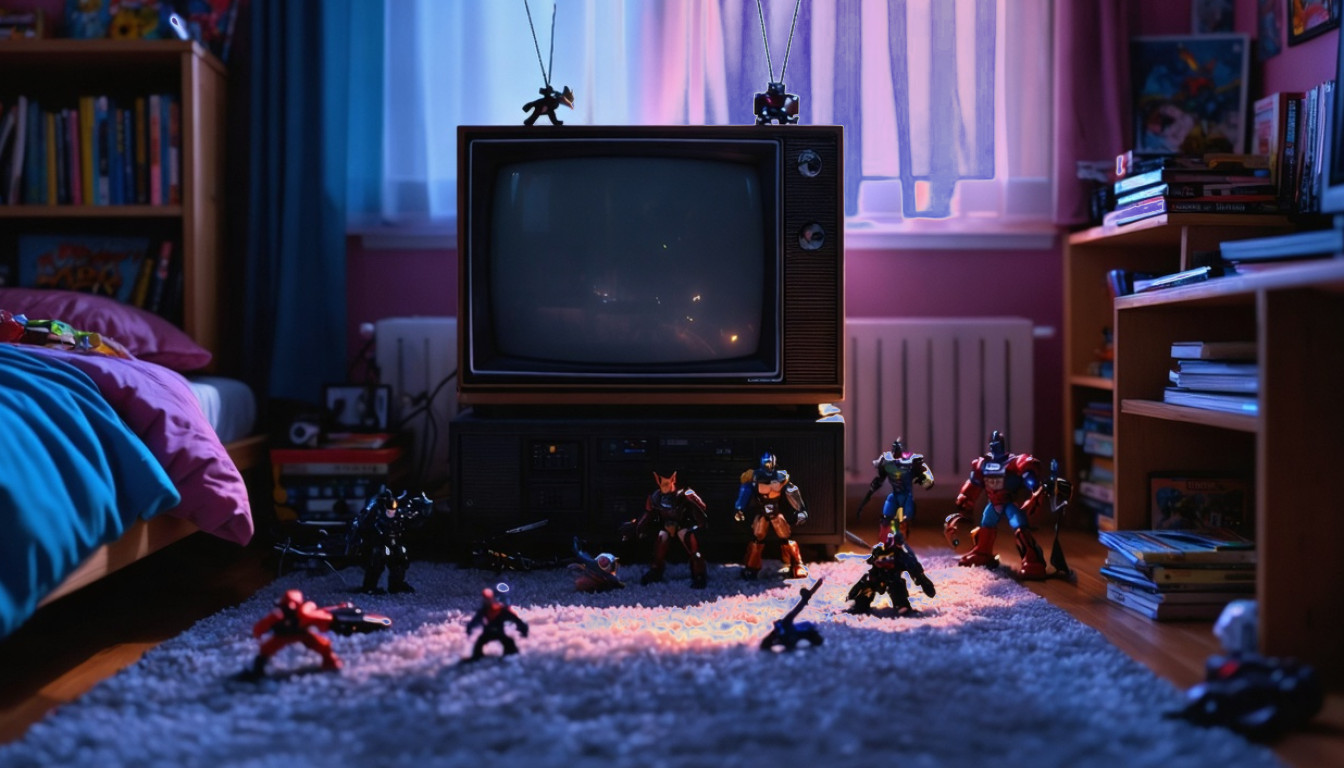
If you grew up in the 80s, you knew the drill: bus home, backpack on the floor, bowl of cereal, and the UHF dial turned until the static cleared. The after-school cartoon block was sacred. No streaming, no DVR, no second chances. You watched what was on, and you loved it.
The big three networks had their lineups, but UHF stations owned the deep cuts. Local independent channels filled the 3 to 5 p.m. slot with whatever syndication deals they could get: Transformers, G.I. Joe, He-Man, Robotech, Voltron. The lineup changed by city and by year, but the vibe was the same: giant robots, lasers, good guys who always won, and toy commercials every four minutes.
Watch it: Transformers: The Complete Series Blu-ray on Amazon (Relive the king of the UHF after-school block with restored episodes and original animation quality)
Here's the ranking, the way it played in living rooms across America when homework could wait and the TV was yours until dinner.
Transformers: The gold standard
Transformers was the king. Autobots vs. Decepticons, Optimus Prime's voice, Starscream's whining, and the fact that every kid on your block had at least one Transformer made it appointment viewing. The animation was cheap, the plots were toy commercials, and none of it mattered. When Optimus died in the 1986 movie, it was a cultural event. The show ran from 1984 to 1987 in first-run form, then lived in syndication for years. If your UHF station had Transformers at 3:30, you were set.
G.I. Joe: A Real American Hero
G.I. Joe was right behind Transformers, and depending on the day, it was #1. Cobra Commander, Destro, the Baroness, Snake Eyes never talking, and "knowing is half the battle" PSAs that taught you nothing useful. The show ran from 1985 to 1986 as a daily series, then continued with a new season in 1989. Syndication kept it alive through the early 90s. The action was nonstop, nobody ever died despite thousands of rounds fired, and every episode ended with a lesson about not playing with matches or talking to strangers. It was perfect.
Robotech: The one that made you think
Robotech was different. It was three Japanese anime series stitched together and dubbed for American TV in 1985, and it didn't talk down to you. Characters died. Love triangles mattered. The Macross Saga, the Robotech Masters, and the New Generation told one long story about war, survival, and transforming fighter jets. If you caught it on UHF, you felt like you'd found something the other kids didn't know about yet. It was deeper than the toy-driven shows, and it stuck with you.
Voltron: Defender of the Universe
Voltron was the gateway drug to giant robot anime for a lot of kids. Five lions, five pilots, and they formed one massive robot to fight King Zarkon and his Robeasts. The show debuted in 1984, adapted from two different Japanese series, and the Lion Force version was the one everybody remembers. The animation was better than most of the American stuff, the action was huge, and forming Voltron never got old. If your station had it, you watched it.
Thundercats and He-Man: The sword-and-sorcery tier
Thundercats (1985) and He-Man (1983) were the fantasy side of the after-school block. Lion-O, Mumm-Ra, the Sword of Omens, and "Thunder, thunder, Thundercats, ho!" made Thundercats a staple. He-Man had the power of Grayskull, Skeletor's cackle, and Battle Cat. Both were toy commercials with better art direction than they had any right to have. He-Man came first and paved the way; Thundercats took the formula and ran with it. Either one in your lineup was a win, but neither quite hit the Transformers/G.I. Joe level of ubiquity.
The deep cuts: what your station had that nobody else did
The beauty of UHF was the randomness. Depending on where you lived, you might've had Silverhawks, M.A.S.K., Jayce and the Wheeled Warriors, Centurions, or Bravestarr. These were the second-tier shows that tried to catch the Transformers lightning and mostly didn't, but if your station ran them, they were your show. You defended them at school. You knew the theme songs. And years later, you're still the only one who remembers them.
Why it mattered
The after-school cartoon block wasn't just about the shows. It was about the ritual: the race home, the fight over the remote, the gamble of flipping channels during commercials and hoping you timed it right. The shows were toy commercials, sure, but they were our toy commercials. They taught us nothing, sold us everything, and we loved every frame of grainy UHF static. The lineup is gone, the stations have changed, but the muscle memory of turning that dial is still there.
Quick answers
What time did after-school cartoons air in the 80s?
Most UHF stations ran cartoons from 3 to 5 p.m., right after school let out. The exact schedule varied by market and station.
Why were so many 80s cartoons just toy commercials?
The FCC loosened rules in 1984 that had limited program-length commercials, so toy companies like Hasbro could produce shows built around their product lines. Transformers, G.I. Joe and He-Man were all designed to sell toys.
What was the difference between network and UHF cartoons?
The big three networks (ABC, NBC, CBS) had Saturday morning blocks, but UHF independent stations filled weekday afternoons with syndicated cartoons. UHF gave you the deeper catalog and the shows that didn't fit the network mold.
Can you still watch these cartoons?
Most are available on DVD or streaming. Transformers, G.I. Joe, Robotech, Voltron, Thundercats and He-Man have all been released in complete series sets.
Was this worth your time?



Sound off
Disagree all you want, swear if you have to (we'll #@$%! it out). No harassment, slurs, threats, spam or links. Comments are screened before they appear, and you'll get a daily heads-up when the conversation picks up. Your email is never shown.