Friday night at Blockbuster: the ritual, the late fees and the fall
For about twenty years, picking a movie meant wandering blue-and-yellow aisles and praying the new releases weren't all checked out.
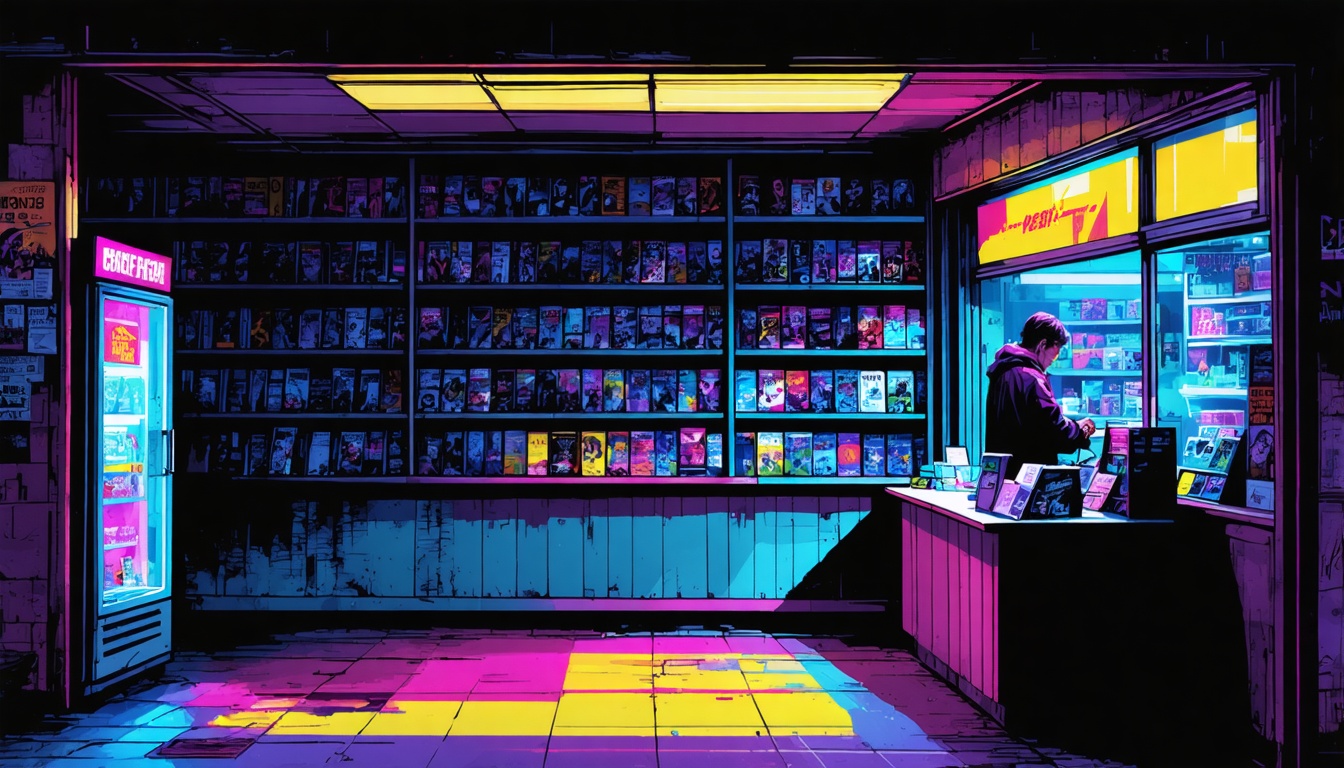
You know the drill. Friday night, after dinner, the whole family piles into the car. You walk into that blast of air conditioning and fluorescent light, and everyone splits up. Dad heads for action. Mom goes to drama. You make a beeline for the new release wall, where every copy of the movie you wanted is already gone.
That was Blockbuster, and for a long stretch it was as much a part of the weekend as pizza.
How it started
Blockbuster opened its first store in Dallas in 1985. The idea was simple: be bigger and brighter than the cramped local video shops, with far more tapes on the shelves. It worked. The chain spread fast through the late '80s and '90s, and at its peak in the mid-2000s it had roughly 9,000 stores.
The stores all felt the same, and that was the point. Same blue-and-yellow ticket logo. Same candy and popcorn by the register. Same empty cases on the shelf that you'd carry up to the counter so they could swap in the real tape.
Be kind, rewind
The rules were part of the ritual. You got a few nights with the rental. You were supposed to rewind the tape before you brought it back, and some stores charged you if you didn't. And if you forgot to return it on time, there was the late fee.
Late fees were the dark heart of the whole operation. Everybody has a story about the movie they forgot under the couch and the bill that came with it. Those fees were annoying for customers but a major source of money for Blockbuster, and that dependence turned out to matter a lot.
The red envelope problem
In 1997, a little company called Netflix started renting DVDs by mail. Its pitch went right at Blockbuster's soft spot: keep the movie as long as you want, no late fees. Around 2000, Netflix's founders reportedly offered to sell the company to Blockbuster for about $50 million. Blockbuster passed.
Blockbuster did eventually try to fight back. In 2005, it announced it was ending late fees, though the program came with fine print about converting overdue rentals into a purchase that annoyed plenty of people. It also launched its own mail and online services. It was too little, too late.
The end, mostly
Between Netflix, Redbox kiosks and then streaming, the stores emptied out. Blockbuster filed for bankruptcy in 2010, and its stores closed over the next few years. Today, a single franchise store in Bend, Oregon, still operates, and it has become a tourist stop for people who want to stand in those aisles one more time.
What we actually miss
It's not the late fees. It's not the drive. It's the shared decision. Streaming gives you every movie ever made and somehow makes picking one harder. At Blockbuster, the limits made it easy. You took what was on the shelf, you argued about it in the car, and you watched it together.
You can still recreate that. Put three DVDs or Blu-rays on the counter Friday night, make everyone vote, and no scrolling allowed. Your kids will roll their eyes. Do it anyway.