
Seinfeld: does it hold up?
A masterclass in sitcom writing that mostly stands the test of time, though some jokes haven't aged as smoothly.
This story has affiliate links. If you buy through them, Radazoid may earn a commission at no cost to you. How that works.
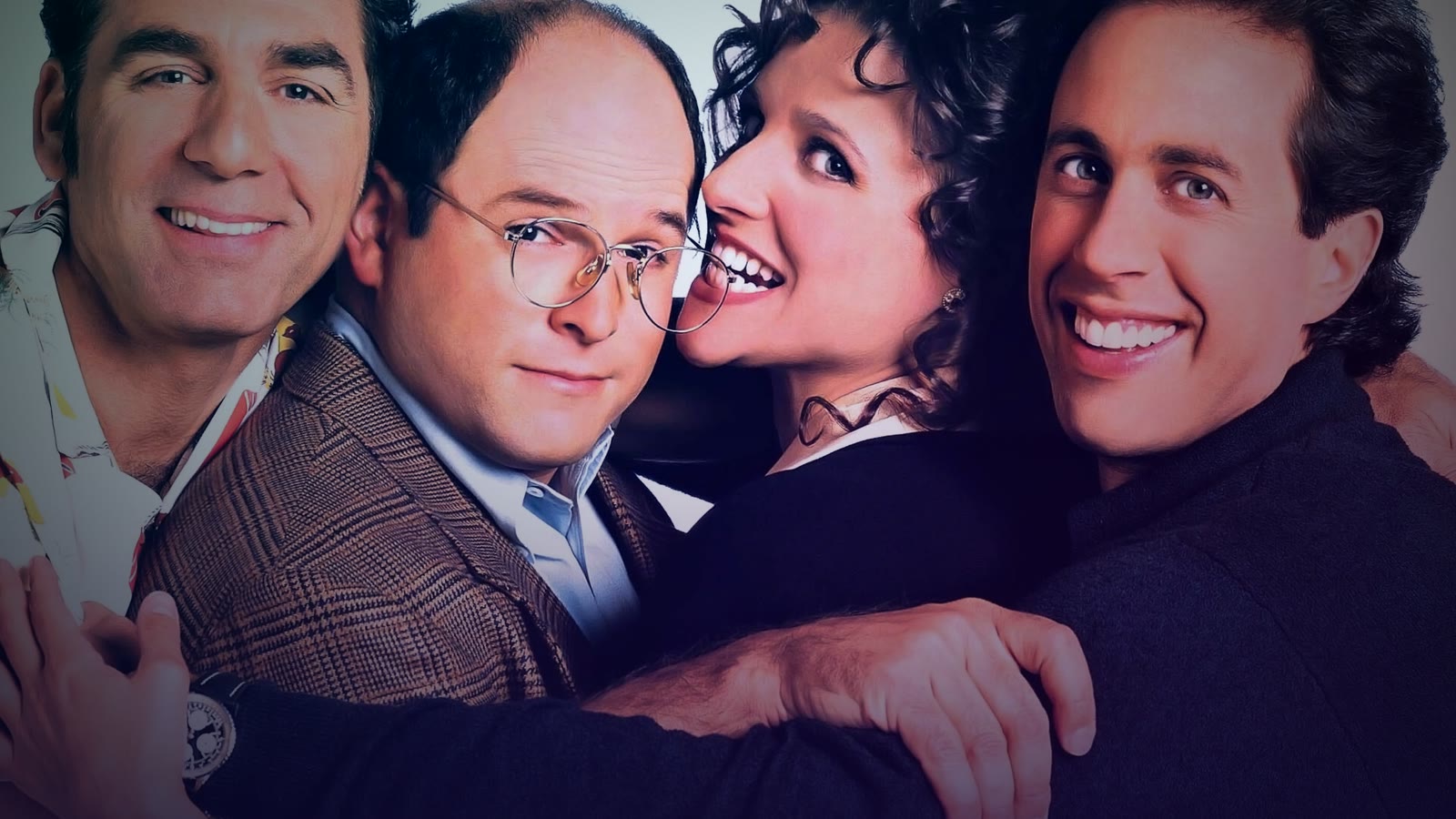
Seinfeld is an American sitcom created by Larry David and Jerry Seinfeld that aired on NBC from 1989 to 1998 for nine seasons and 180 episodes. It stars Jerry Seinfeld as a fictionalized version of himself, with Julia Louis-Dreyfus, Michael Richards, and Jason Alexander as members of his core group of friends. The show is set mostly in and around Jerry's apartment on Manhattan's Upper West Side and has been described as "a show about nothing," often focusing on the minutiae of daily life. IMDb users rate it 8.8 out of 10.
What made it so good?
In the late 1980s, Jerry Seinfeld pitched NBC on a sitcom about a comedian's life. He partnered with fellow comedian Larry David, and together they created something that broke the sitcom formula: no hugging, no learning, no heartwarming lessons. Just four people navigating the small absurdities of New York life—a button, a parking spot, a soup line, a Chinese restaurant reservation.
Watch it: Seinfeld: The Complete Series Blu-ray on Amazon (Own all 9 seasons in high quality for the rewatch this review recommends, with bonus features and commentary)
The writing is surgical. Every scene has a premise, a conflict, and a payoff. The ensemble cast has chemistry that feels effortless; nobody phones it in. Michael Richards' Kramer is a physical comedy machine. The show was a favorite among critics and became one of the most influential American sitcoms of all time.
NBC's research showed early on that the show was popular with young male adults, a demographic advertisers wanted. That gave the network reason to stick with it through its slow climb to the top. By the mid-1990s, it was appointment television.
What still holds up?
Most of it. The premise is timeless because it's about human behavior, not trends. A man overthinking a text message, a friend's annoying habits, the social contract of waiting in line—these things don't change. The dialogue crackles. The timing is impeccable.
The characters are fully realized without being sentimentalized. George is a pathetic loser and we love him for it. Elaine is neurotic and self-absorbed. Kramer is a chaos agent. Jerry is selfish and shallow. They're not good people, and the show never pretends otherwise. That moral ambiguity was radical for network TV in the 1990s.
If you grew up on this show, you'll rediscover jokes you forgot and catch callbacks you missed the first time. The writing rewards a second viewing.
What aged poorly?
Some episodes feel locked in their moment. The technology references (pay phones, beepers, the Walkman) are period pieces now, which is fine—nostalgia is part of the appeal. But a few jokes rely on attitudes that feel stale: some of the material around dating and bodily functions lands harder if you're not thinking too hard about it.
The final season is where the show lost its footing. The writing became broader, less focused. The series finale was divisive—some viewers felt it betrayed the show's premise by trying to add weight to a show that thrived on weightlessness. It's a rough note to end on, though the preceding eight seasons are strong enough to outlast it.
How to watch it now
Seinfeld streams on Netflix. You can also purchase seasons or individual episodes through digital retailers. The show is also in heavy syndication rotation on cable and streaming services.
A note on rewatching: if you're new to it, don't expect a heartwarming family sitcom. Expect smart, cynical comedy about four people who learn nothing and grow not at all. That's the point. If you care about how jokes are constructed, how scenes are paced, how a premise is mined for every laugh, this is the textbook.
The verdict for a grown-up who loved it back then
Watch it. Eight out of nine seasons are excellent, and even the weaker stretches are better than most sitcoms. The show is a masterclass in comedy writing. It won't feel exactly the same as it did in the 1990s, but that's not a flaw; it's a reminder of where you were when you first watched it. The show holds up because it was built to last, not to trend.
Is Seinfeld worth watching?
A masterclass in sitcom writing and comedic timing that largely holds up decades later; smart, cynical humor about everyday absurdities will appeal to anyone who appreciates well-crafted comedy, though it's not a heartwarming show and doesn't try to be.
Seinfeld parents guide: what is it rated, and what age is it for?
Rated TV-14 · Best for 14+. Language includes frequent mild profanity and occasional stronger words. Sexual content is discussed and referenced often but rarely shown explicitly; the humor frequently involves dating, bodily functions, and adult situations. No graphic violence. Some episodes contain dated attitudes about relationships and bodies that may feel uncomfortable by modern standards. The show is cynical and amoral by design—characters are selfish and learn nothing—which is the point but worth knowing.
Is Seinfeld woke?
Not woke. The show is fundamentally about flawed, self-absorbed characters of both sexes who face consequences for their behavior, with no agenda beyond mining comedy from human nature. Julia Louis-Dreyfus's Elaine is a fully realized character who is neurotic and self-absorbed by design, not a Mary Sue, and the show treats all four main characters as equally ridiculous. No messaging is pushed; the comedy comes from character and premise, not from any ideological position.
Quick answers
Is the show still funny?
Yes. The writing is tight and the timing is excellent. Most episodes hold up because they're about human behavior, not dated references. A few jokes feel stale, but the core comedy is strong.
Should I start from season 1?
Yes. The first season is short and introduces the characters and the show's rhythm. The show gets better as it goes, but starting at the beginning gives you the full picture.
Is the ending worth watching?
The finale is divisive. Seasons 1–8 are solid; season 9 loses focus. Watch it and form your own opinion, but don't let a weak ending sour you on the rest.
How long does it take to rewatch all nine seasons?
Each episode is about 22 minutes. Nine seasons of 180 episodes total roughly 66 hours. You can finish it in a month watching a few episodes a week.
Was this worth your time?










Sound off
Disagree all you want, swear if you have to (we'll #@$%! it out). No harassment, slurs, threats, spam or links. Comments are screened before they appear, and you'll get a daily heads-up when the conversation picks up. Your email is never shown.