
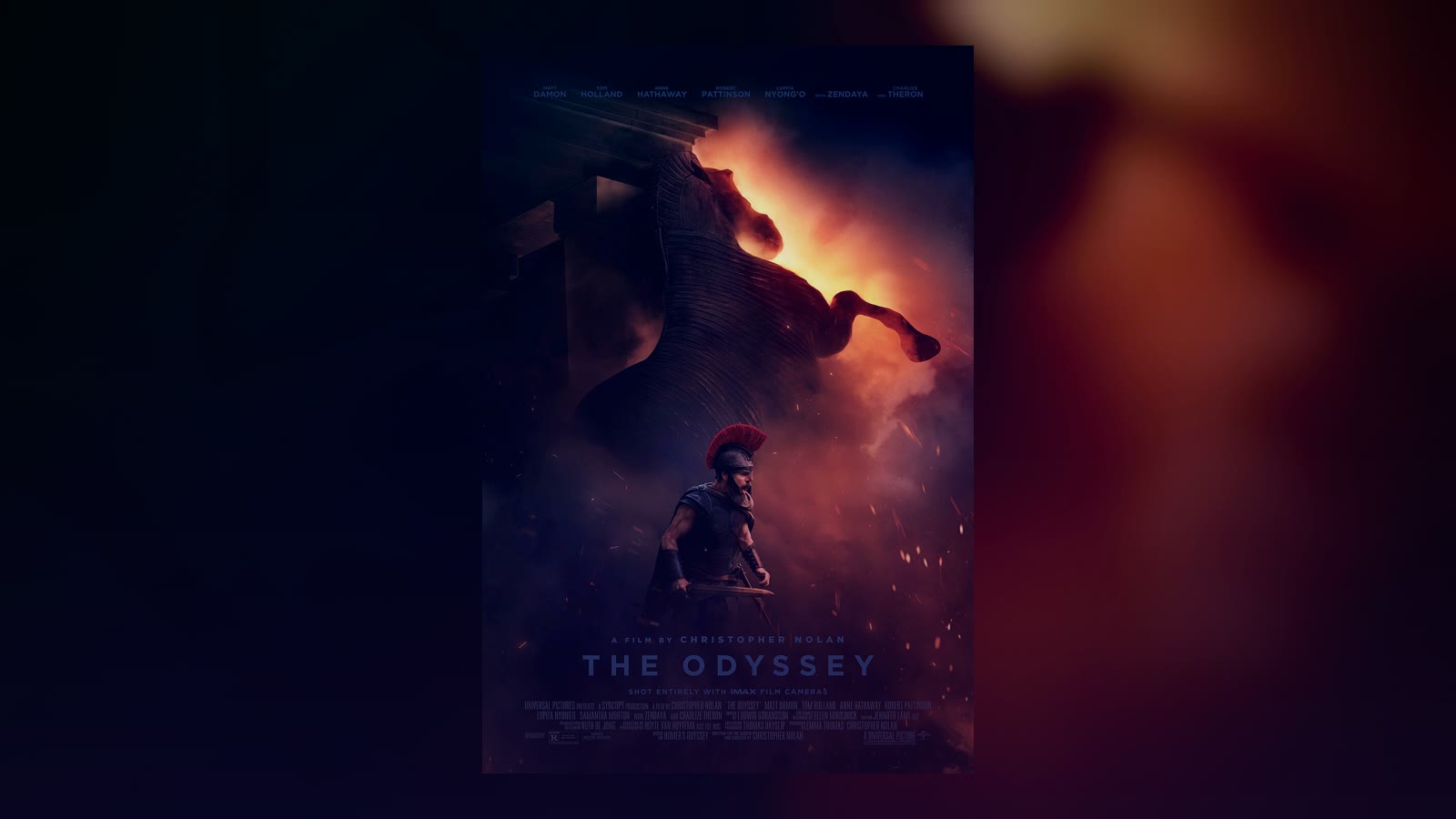
The Odyssey (2026): Christopher Nolan's epic adaptation
Nolan brings Homer's ancient epic to the screen with a massive cast and groundbreaking 70mm cinematography—but does his grittier take on the myth work?
This story has affiliate links. If you buy through them, Radazoid may earn a commission at no cost to you. How that works.
Christopher Nolan's The Odyssey is an epic adaptation of Homer's ancient Greek poem, starring Matt Damon as Odysseus, with an ensemble cast including Tom Holland, Anne Hathaway, Robert Pattinson, Lupita Nyong'o, Zendaya, John Leguizamo, Samantha Morton, Charlize Theron, Jon Bernthal, Himesh Patel, Elliot Page, and Benny Safdie. The film is shot entirely on 70mm IMAX film cameras, marking a technical milestone for Nolan's filmmaking. The story follows Odysseus's struggle to return home to Ithaca and his wife Penelope after the Trojan War, encountering mythical beings along the way.
This is Nolan's most ambitious undertaking yet in terms of scale and scope. Cinematographer Hoyte van Hoytema shot on location across multiple countries, and Ludwig Göransson composed the score. The ensemble cast includes some of the biggest names in film, all working under Nolan's direction to bring an ancient epic to modern audiences.
Watch it: The Odyssey by Homer (Penguin Classics) on Amazon (Refresh on the source material before seeing Nolan's grittier reimagining of this ancient epic)
What we know about the approach
Nolan has indicated he's taking a grittier, more historically grounded interpretation of Greek mythology rather than a straight adaptation of Homer's poem. He studied the special effects work of Ray Harryhausen during development, suggesting the mythological encounters will blend spectacle with realism. The film stages its action on a massive scale designed for IMAX viewing.
The cast carries significant dramatic weight. Matt Damon plays Odysseus as a weathered king trying to remember why home matters. Tom Holland and Anne Hathaway anchor the story in real emotional stakes, while the ensemble elevates the broader narrative.
Who should watch it
If you love epic historical fiction, ambitious filmmaking, and Nolan's other large-scale work—Interstellar, Dunkirk, Oppenheimer—this is built for you. The 70mm cinematography is designed for the biggest screen possible; IMAX or premium large format will showcase what Nolan intended.
Fans of Homer's original epic may want to know that Nolan is reimagining the source material rather than adapting it straight. That's worth considering before you buy a ticket.
Quick answers
Do I need to have read Homer's Odyssey to understand the film?
Probably not. The film works as a standalone epic, though familiarity with the basic story—Odysseus's journey home, the suitors, Penelope—will help you follow along.
Is this better on IMAX or regular theater?
IMAX is worth seeking out. This is one of the first films shot entirely on 70mm IMAX cameras, and the cinematography is designed for that scale. Regular theater works, but you'll experience the technical achievement Nolan intended on a bigger screen.
How does this compare to Nolan's other epics like Oppenheimer or Dunkirk?
It's in the same league—ambitious, technically masterful, and emotionally heavy. If you loved those, you'll likely appreciate this one too.
🛒 Printable 80s trivia, bingo & party games → Radazoid Shop
🖨️ Printable party games & trivia at Printable Barn →
Was this worth your time?

Sound off
Disagree all you want, swear if you have to (we'll #@$%! it out). No harassment, slurs, threats, spam or links. Comments are screened before they appear, and you'll get a daily heads-up when the conversation picks up. Your email is never shown.