
Still Holds Up: Die Hard (1988)
Why Die Hard's vulnerable hero still beats every superhero blockbuster
This story has affiliate links. If you buy through them, Radazoid may earn a commission at no cost to you. How that works.
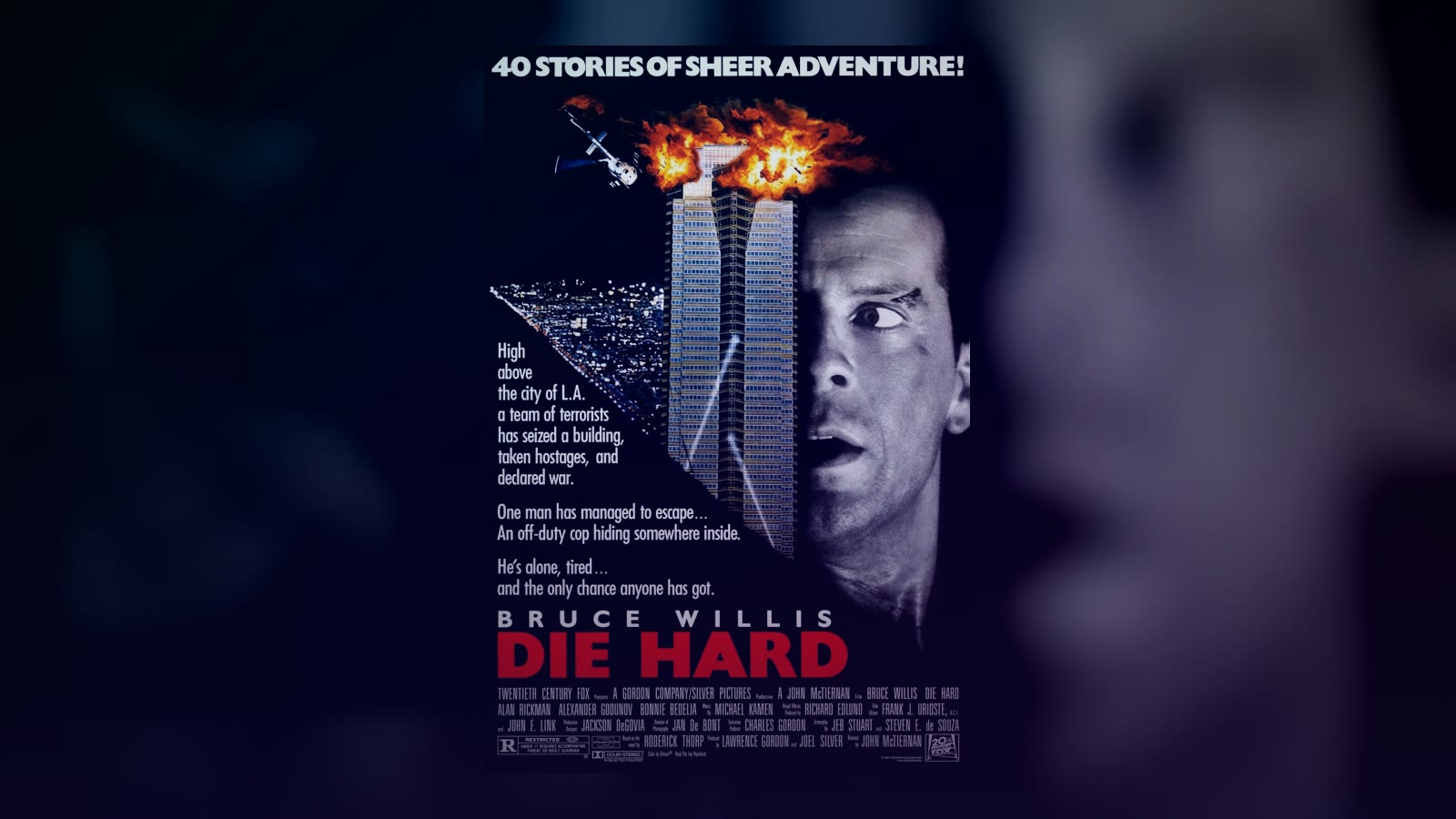
Die Hard holds up completely. It's a film about a cop who shows up, does his job, takes a beating and saves his family—no quips, no CGI, no winking at the camera. In the film, John McClane is portrayed as a guy who is tired, hurt, furious and absolutely willing to die to save the people in the building and reconcile with his wife. That's not a superhero. That's a father. And it works better now than it did in 1988, because we're starved for heroes like him.
What It Was and Why We Loved It
John McClane is a New York cop who flies to Los Angeles on Christmas Eve to reconcile with his estranged wife Holly at her company's holiday party in Nakatomi Plaza. While he's in the bathroom, Hans Gruber (Alan Rickman) and his henchmen take over the building, posing as terrorists to conceal their theft and hold the party hostages. McClane is barefoot, outnumbered and furious. He has to fight his way through the building one man at a time while bleeding on broken glass.
Watch it: Die Hard Blu-ray on Amazon (The article specifically recommends the Blu-ray for clean picture and crucial sound design of glass, gunfire and screami)
It worked because it was simple. No secret government plot. No alien invasion. No saving the world. A man saves his marriage by saving the people in a building. The stakes are personal, the hero is vulnerable, and the villain is smarter than he looks. Rickman's Gruber is not a cartoon; he's a professional who respects his opponent and loses because he underestimates love.
The Hero It Gave Us (and Why That Matters Now)
McClane is not a superhero. He's a cop who gets shot at, beaten down, cut up and nearly killed. He limps. He bleeds. He's scared. And he keeps going because his wife is in that building. That's the entire movie: a man doing his job because he loves his family.
We don't get heroes like that anymore. Modern action films give us invincible men in suits with perfect hair who crack jokes while the world burns. McClane is barefoot in broken glass, limping through air vents, killing men with his bare hands because he has no choice. He's not trying to be cool. He's trying to survive and get home.
That hits different now. A lot of us are dads. We've screwed up. We know what it costs to fix it. McClane's whole arc is a man who realizes he's been wrong about his marriage and is willing to bleed to prove it. That's not a plot device. That's real.
What Aged Badly
The special effects are dated—obvious rear projection, some rough stunt work, the occasional wire showing. But here's the thing: you stop noticing after ten minutes because the script and the acting are so good. The story doesn't rely on spectacle. It relies on tension, character and consequence.
Some of the one-liners feel of their time (the Reginald VelJohnson cop-buddy stuff is 1988 buddy-cop boilerplate), but they're not cringe. They're just there. The film knows what it is and doesn't apologize.
How to Watch It
Die Hard is available for purchase on disc and digital. The Blu-ray is the way to go if you can find it; the picture is clean and the sound design—all that broken glass, gunfire and screaming—is crucial to the film.
Watch it on Christmas Eve if you can. That's not nostalgia talking. The film is set on Christmas Eve, and there's something about watching a man fight for his marriage while the world outside is supposed to be full of peace and joy. It makes the desperation feel real.
The Straight Verdict
Buy it. Own it. Watch it every few years. It's a masterclass in action filmmaking, character development and what a hero actually looks like. It's a film about a man who screwed up, knows it, and is willing to bleed to fix it. In 2026, when we're drowning in CGI spectacle and heroes with no skin in the game, that's revolutionary.
And if you haven't seen it since you were a kid, watch it again. You'll understand it differently now. You'll understand why McClane risks everything for Holly. You'll understand why he's furious at himself for letting work come between them. You'll understand why he keeps fighting even when he's broken.
That's a movie worth holding onto.
Is Die Hard worth watching?
A masterclass in action filmmaking that holds up completely: a tense, character-driven story about a flawed man fighting to save his family and marriage. Action fans and anyone who appreciates smart storytelling will love it.
Die Hard parents guide: what is it rated, and what age is it for?
Rated R · Best for 16+. Significant violence including gunfire, explosions, hand-to-hand combat and deaths; some blood and injury detail; occasional strong language; a scene of partial nudity (non-sexual); themes of marital conflict and reconciliation. No sexual content, drug use or graphic gore. The film treats violence as consequential, not glorified.
Is Die Hard woke?
Not woke. Die Hard is a straightforward action film centered on a flawed but heroic father fighting to save his family and marriage. The story earns its stakes through character and consequence, the hero is a working man who bleeds for what matters, and the film makes no political statements—it simply tells a story about love, duty and redemption.
Quick answers
Is Die Hard a Christmas movie?
It's set on Christmas Eve and deals with family reconciliation, so yes—but it's also a perfect action film any time of year. The Christmas setting matters to the story, not the other way around.
Does it compare to other 80s action films like Commando or Lethal Weapon?
It's smarter and tighter than Commando, and more grounded than Lethal Weapon. Die Hard trusts its audience; the other films lean harder on spectacle and humor. All three hold up, but Die Hard is the most rewatchable.
How does it hold up compared to the sequels?
The first film is the tightest and most character-driven. The sequels are fun but louder and less personal. If you're watching one Die Hard, make it this one.
Was this worth your time?



Sound off
Disagree all you want, swear if you have to (we'll #@$%! it out). No harassment, slurs, threats, spam or links. Comments are screened before they appear, and you'll get a daily heads-up when the conversation picks up. Your email is never shown.