
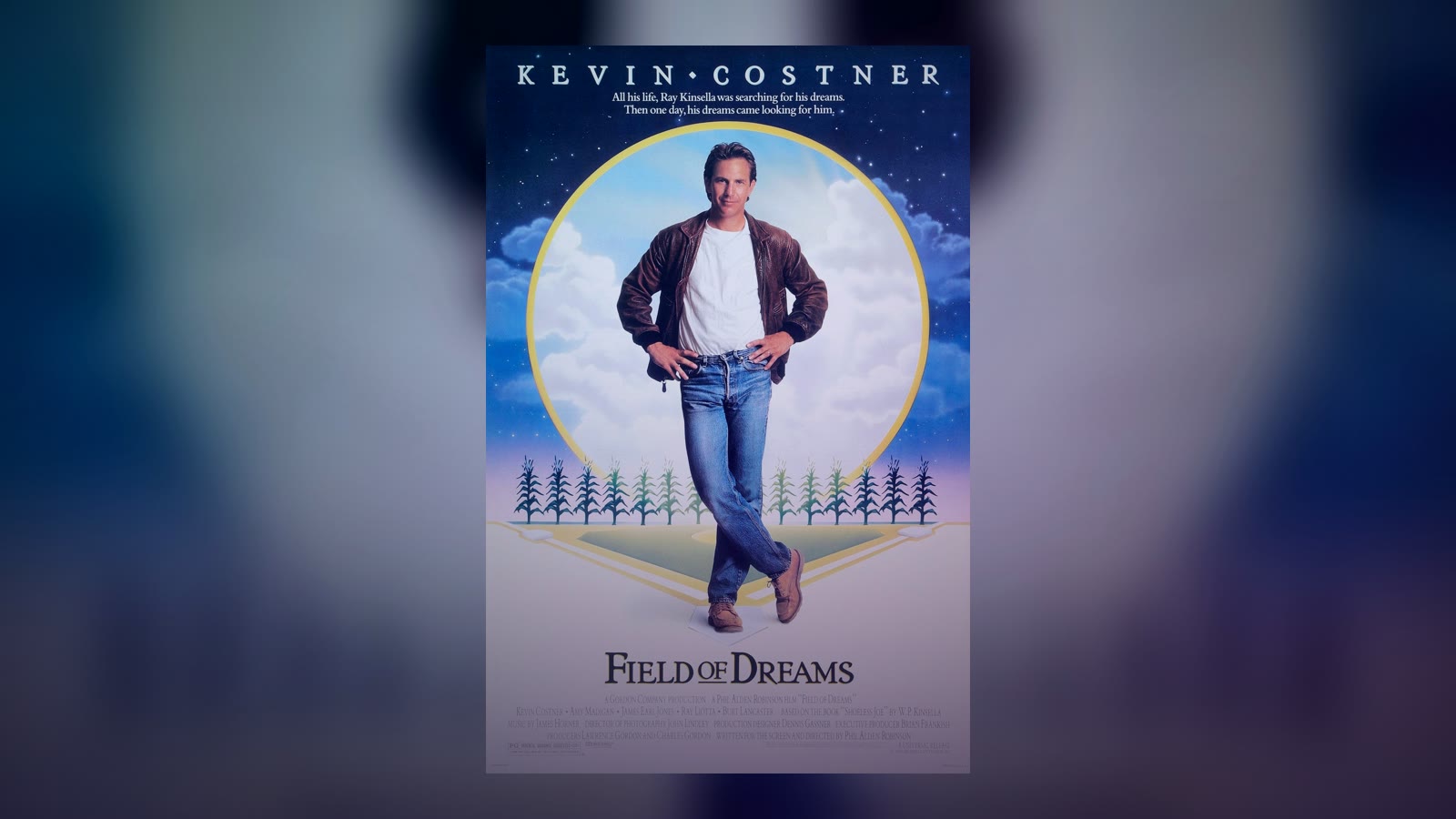
Still Holds Up: Field of Dreams (1989)
A farmer's faith in a mysterious voice transforms his cornfield—and his family.
This story has affiliate links. If you buy through them, Radazoid may earn a commission at no cost to you. How that works.
Field of Dreams holds up completely. It's a movie about a man who listens to a voice, trusts his gut against everyone's judgment, and builds something meaningful for his family and his community—and it works. The baseball is the hook; the story is about faith, redemption, and what a father owes his son. Watch it.
What It Was and Why We Loved It
Released in 1989, Field of Dreams starred Kevin Costner as Ray Kinsella, an Iowa farmer who hears a mysterious voice telling him to build a baseball diamond in his cornfield. "If you build it, he will come," the voice says. Ray does it anyway—against his wife's fear, his bank account's protests, and his brother-in-law's contempt—and dead baseball players from the past start showing up to play.
Watch it: Field of Dreams (1989) 4K Ultra HD Blu-ray on Amazon (Experience the classic in pristine quality; the practical effects and Iowa cinematography deserve the best presentation )
On the surface it sounds absurd. In execution, it's a prayer disguised as a sports movie. Ray isn't chasing fame or money. He's chasing a chance to understand his estranged father, a minor-league ballplayer who died before they could reconcile. The ghosts are a metaphor for second chances and the past made present. The movie never explains the magic; it just asks you to believe that some things matter more than reason.
We loved it because it trusted us. No winking, no irony, no apology. A man acts on faith and it pays off. His marriage survives the financial ruin. His community is healed. His father comes home. That was a rare thing in 1989 and it's rarer now.
The Kind of Hero It Gave Us
Ray Kinsella is a specific kind of man: a provider who gambles everything on a conviction that his family thinks is insane. He doesn't ask permission. He doesn't form a committee. He doesn't apologize for his vision or his faith. He acts, and when doubt creeps in, his wife—played by Amy Madigan—stands by him anyway.
The movie respects both of them. It doesn't make Ray's wife a sidekick or a nag; she's terrified and angry and loyal all at once, and the movie understands that marriage is harder than following a voice in a cornfield. When Ray's brother-in-law shows up to tear down the field, he's not a cartoon villain—he's a man trying to protect his sister from what looks like financial suicide. The movie lets him be right about the risk and still wrong about the dream.
That's the movie's secret: it respects everyone's position and still commits to Ray's faith. It doesn't mock doubt; it just shows that some things are worth the risk.
What Hits Different Now
Field of Dreams feels like a relic of a time when a mainstream movie could celebrate a man's unshakeable conviction without irony or deconstruction. Ray isn't questioned about his masculinity or his right to make the choice. His faith isn't treated as a character flaw. His wife isn't given a separate empowerment arc to justify her presence. The movie just lets people be people.
The patriotism and family loyalty run through every scene. Ray's father comes back as a young man in his prime—a ghost who gets to be young and strong again—and Ray gets to say the things he never said before. "I'm glad you're here," he tells his father. The movie earns that moment without lecture or sentiment. It's about a son and his father, and that's enough.
The faith element is woven in without being preachy. Ray acts on a voice he can't explain or defend. He's not rewarded with wealth or fame; he's rewarded with his father, with his marriage intact, and with a ballfield full of ghosts playing the game they loved. The movie suggests that some things matter more than money, and that's almost radical now.
What Aged Badly (Almost Nothing)
The special effects are practical and restrained—the ghosts are just ballplayers in old uniforms, lit softly, and it works better than any CGI would. The dialogue is direct and unsentimental. The pacing is slow, which will test a modern viewer raised on cuts every two seconds, but the slowness is the point: Ray has to sit with his decision and his doubt, and so do we.
The only real dated element is the financial anxiety—the threat of losing the farm to foreclosure feels like 1989 specifically—but that's not a flaw. It's the texture of the time, and it makes Ray's faith cost something real.
How to Watch It
Field of Dreams is available for purchase on digital platforms and physical media. Check your preferred streaming service for current availability, or buy it to own. The picture quality on modern formats is excellent. Watch it in one sitting, in the evening, without your phone. It's a movie that asks for your attention and pays it back.
The Verdict
Watch it. If you loved it as a kid, it still works. If you've never seen it, it will surprise you: it's smarter and more earned than you expect, and it trusts you to believe in something without explaining it away. It's a movie about a man who acts on faith and conviction. That commitment to his vision—without apology, without a lecture, without a twist that undercuts it—is what makes it hold up. That's rare now. That's why it matters.
Is Field of Dreams worth watching?
Absolutely worth watching. A thoughtful, faith-driven drama that respects its audience and characters, with baseball as the vehicle for a story about redemption, fatherhood, and second chances that resonates across generations.
Field of Dreams parents guide: what is it rated, and what age is it for?
Rated PG · Best for 10+. Very family-friendly. No violence, profanity is minimal, no sexual content or nudity. Some scenes of financial stress and family conflict may be intense for very young children, but nothing graphic. The film has Christian themes (faith, redemption, grace) presented respectfully and organically to the story. Strong portrayal of marriage, fatherhood, and family loyalty.
Is Field of Dreams woke?
Not woke. The film celebrates traditional values—faith, family, fatherhood, marriage, and masculine conviction—without apology or irony. It respects both the protagonist's agency and his wife's loyalty without undermining either, and treats doubt and disagreement as honest positions rather than character flaws to be mocked or 'corrected.'
Quick answers
Is it really about baseball?
No. Baseball is the setting and the language the movie speaks, but it's about a father and son, faith and second chances, and what a man will risk for something he believes in.
Do I need to care about baseball to enjoy it?
No. The baseball is beautiful, but the story works if you know nothing about the game. It's about the people, not the sport.
Is it slow?
Yes, deliberately. The pacing gives you time to sit with Ray's doubt and his conviction. If you're used to modern cuts and jump-scares, it will feel patient. That's a feature, not a bug.
Does it have a happy ending?
Yes, but not the kind you'd expect. Ray gets what he needs, not what he thought he wanted, and the movie earns it without cheap sentiment.
Was this worth your time?






Sound off
Disagree all you want, swear if you have to (we'll #@$%! it out). No harassment, slurs, threats, spam or links. Comments are screened before they appear, and you'll get a daily heads-up when the conversation picks up. Your email is never shown.