
Still Holds Up: Heat (1995)
Michael Mann's 1995 masterpiece still outshines modern crime films—and the competent, tragic men it celebrates feel increasingly rare.
This story has affiliate links. If you buy through them, Radazoid may earn a commission at no cost to you. How that works.
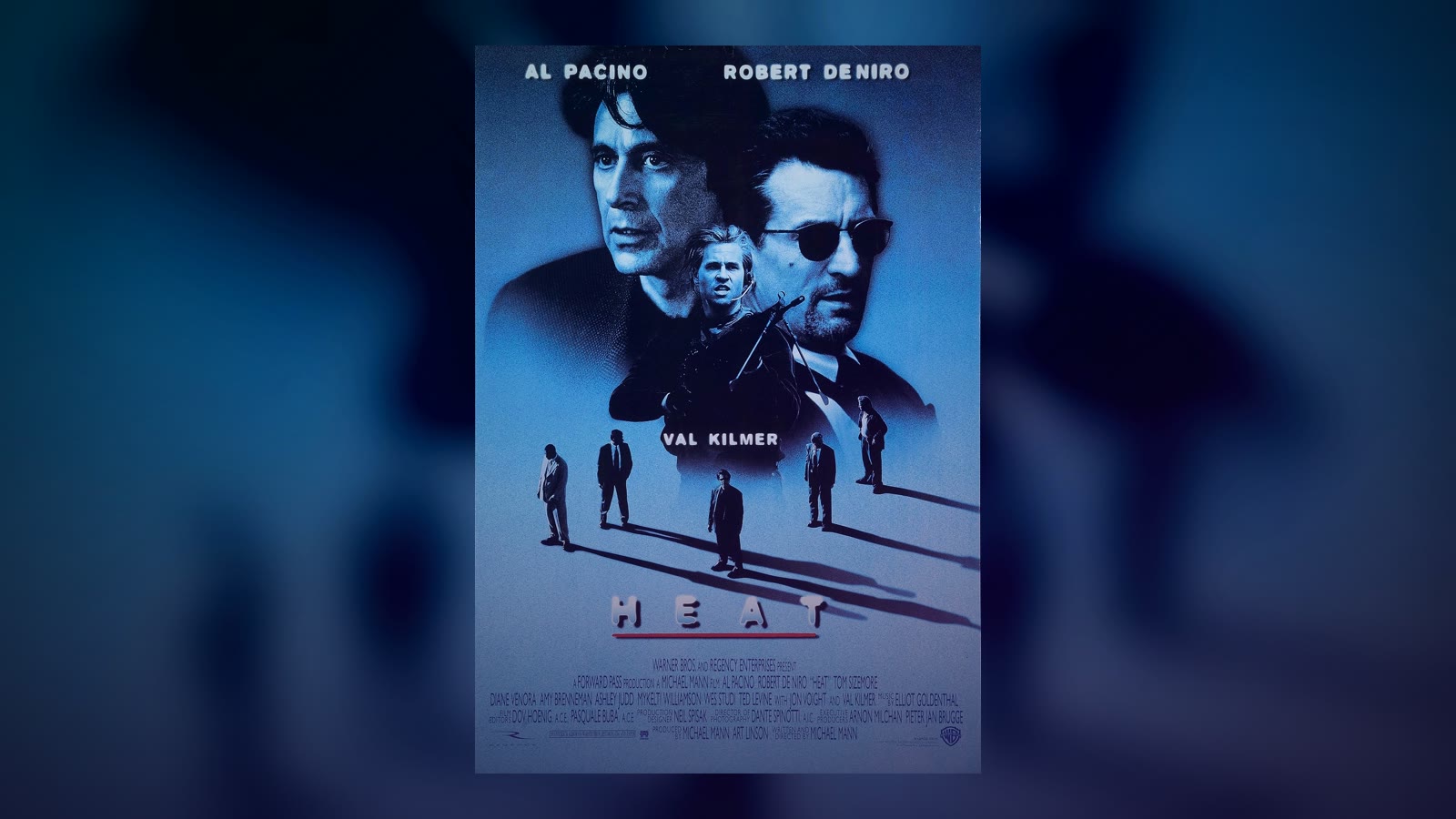
Heat is a 1995 crime epic written and directed by Michael Mann, starring Al Pacino as an LAPD detective and Robert De Niro as a professional thief. The film follows their cat-and-mouse game across Los Angeles as both men's lives fall apart around them. It's 170 minutes long and remains one of the greatest crime films ever made.
What Made It Matter Then
In 1995, Heat arrived as a corrective. It was a film about men—their work, their codes, their failures as husbands and fathers—and it treated both the cop and the criminal with the same gravity. Pacino's Vincent Hanna is a Marine-trained detective so married to the job that his third marriage is collapsing and his stepdaughter attempts suicide. De Niro's Neil McCauley is a thief so disciplined he won't let himself care about anyone, until he meets a woman and realizes what he's sacrificed. Both men are exceptional at what they do. Both are broken by it. The film doesn't lecture; it just shows you two men who respect each other enough to promise they'll kill each other if they have to.
Watch it: Heat (1995) 4K Ultra HD Blu-ray on Amazon (Experience Mann's masterpiece in the highest quality—the cinematography and LA shootout demand it)
The action sequences—especially the downtown Los Angeles bank robbery shootout—redefined how crime films looked. Mann shot it like a documentary, with real geography and real consequences. When people die, they stay dead. When the crew escapes with the money, it's not a victory; it's a setup for the next failure.
The Men It Gave Us
Here's what kills me about Heat now: it's a film that respects masculine competence and sacrifice without irony. Hanna is a good cop. He's smart, he's tough, he's loyal to his team, and he's willing to bend the rules when justice demands it. He fails his family, but not because he's weak or stupid—he fails because the job demands everything and there's nothing left for home. That's a real tragedy, not a punchline.
McCauley is a thief, but he's a professional. He has a code. He doesn't hurt innocent people. He plans meticulously. He's capable and self-reliant. The film shows you why men like this exist and what it costs them. It doesn't apologize for them, and it doesn't mock them either.
Val Kilmer, Tom Sizemore, and Dennis Haysbert play crew members with the same weight. These are men who chose a life outside the law, and the film treats that choice with respect even as it shows you the price. Nobody's a victim here. Nobody's asking for your sympathy. They made their choice and they live with it.
What Still Holds
Everything. The script is tighter than most films half its length. The performances are all-in—Pacino and De Niro both disappear into their roles. The cinematography by Dante Spinotti is stunning without showing off. The editing keeps a lengthy film moving. Elliot Goldenthal's score sits underneath without manipulating you.
But the real reason it holds is the clarity. Heat knows exactly what it's about: the collision between two men who are good at their jobs and bad at their lives. It doesn't try to make you feel a certain way. It shows you the facts and lets you decide. Hanna shoots McCauley at the end. Hanna takes his hand as he dies. That's the whole thing. You can read it a dozen ways, and all of them are true.
What Aged (A Little)
The personal storylines involving the wives are thinner than the crime plot, and they feel it. Diane Venora and Amy Brenneman are fine, but their characters exist mainly to show you how the men's choices hurt people. That's intentional—Mann's not interested in their inner lives—but by modern standards it reads as incomplete. Ashley Judd gets more to do as Chris Shiherlis's wife, and her one scene where she warns him off with a hand gesture is devastating.
Hanna's stepdaughter subplot feels more theatrical than earned, mostly because we barely know her. The suicide attempt is the one moment where the film reaches for emotion instead of earning it.
Would Hollywood Make It Now?
Not a chance. A lengthy crime film centered entirely on men, with no lectures about their behavior, no female leads, no apologies for masculine competence and sacrifice? Studios wouldn't greenlight it. The streaming services wouldn't touch it. It would test poorly with the focus groups because it doesn't tell you what to think.
More than that: Heat is fundamentally about men failing at home because they're too good at work. It doesn't blame capitalism or society or toxic masculinity. It just shows you the trade-off and lets you live with it. That kind of moral clarity—that kind of respect for the audience's intelligence—isn't in fashion.
How to Watch It
Stream it on Max, rent it on Apple TV or Amazon, or buy the Blu-ray. It's worth owning. The picture is clean, the sound is immaculate, and you'll want to revisit it. Plan for a full evening and don't check your phone. This is a film that demands your attention, and it pays you back for it.
Is Heat worth watching?
Heat is a masterpiece of crime cinema that remains essential viewing: an epic that treats its characters with gravity and respects both competence and consequence. Fans of intelligent action films, character-driven drama, and 1990s cinema will find it rewarding.
Heat parents guide: what is it rated, and what age is it for?
Rated R · Best for 16+. Heat contains intense violence including a famous downtown Los Angeles shootout with significant gunfire and casualties, plus other shooting deaths. Language includes frequent profanity. There is some sexual content and brief nudity. The film deals with adult themes including infidelity, suicide attempts, and the breakdown of marriages. No drug use or drinking beyond social scenes.
Quick answers
Is the Pacino-De Niro coffee scene really as good as people say?
Yes. Two world-class actors sitting across from each other, talking about their lives and their choices, with no music and no camera tricks. It's the heart of the film, and it's perfect.
Do I need to watch the whole thing, or can I skip around?
Watch the whole thing. Mann builds it like a symphony. The slow parts matter. The dialogue matters. If you're looking for just the action scenes, you'll miss what makes this film great.
Is it better than modern crime films?
It's not even close. Modern crime films are either procedurals that don't know what they're about, or they're so focused on style they forget to give you characters. Heat has both.
Was this worth your time?





Sound off
Disagree all you want, swear if you have to (we'll #@$%! it out). No harassment, slurs, threats, spam or links. Comments are screened before they appear, and you'll get a daily heads-up when the conversation picks up. Your email is never shown.