
Still Holds Up: Road House (1989)
Patrick Swayze's bouncer masterpiece is tougher and smarter than you remember.
This story has affiliate links. If you buy through them, Radazoid may earn a commission at no cost to you. How that works.
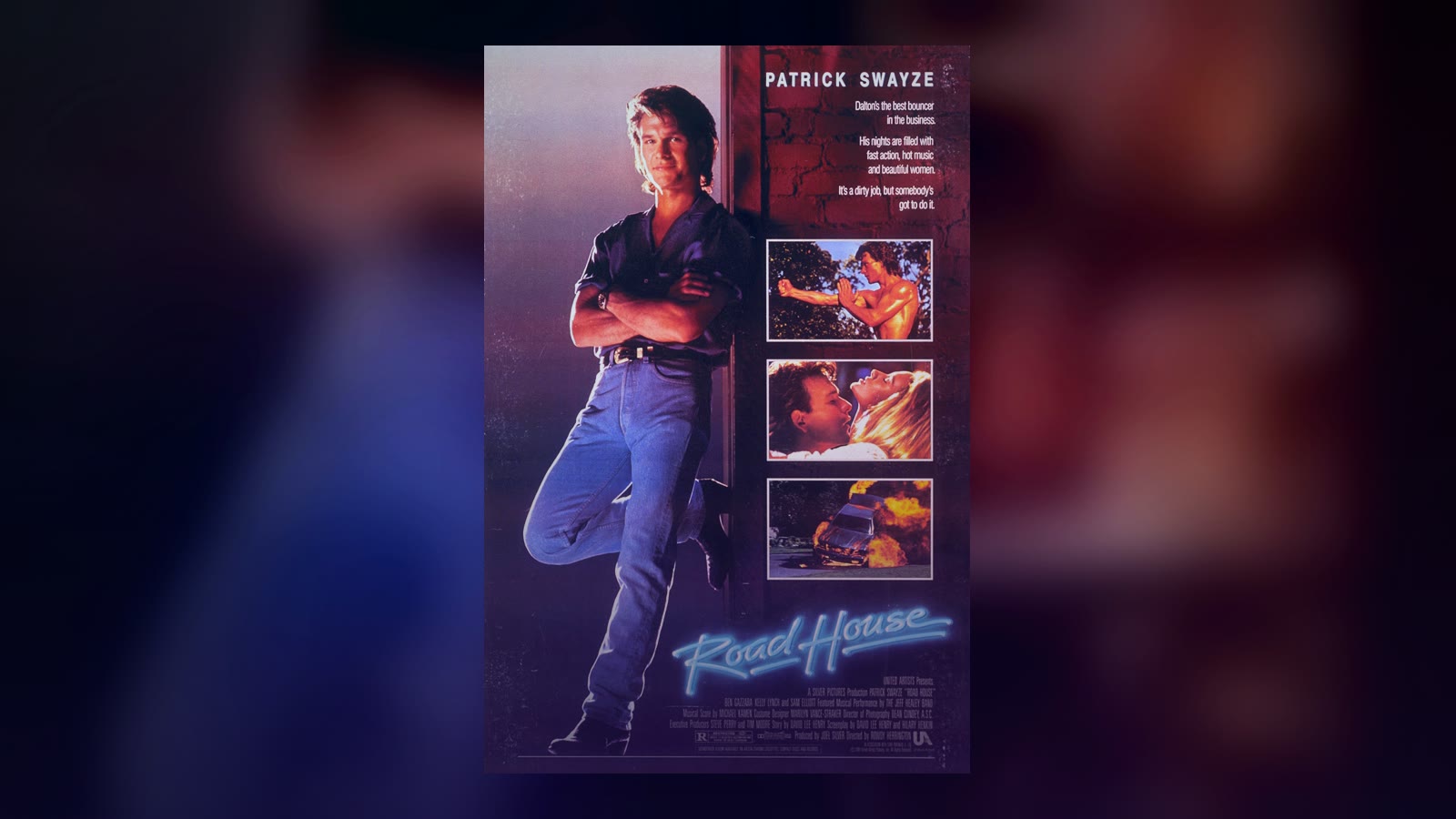
Road House is a 1989 action film directed by Rowdy Herrington, starring Patrick Swayze as James Dalton, a professional bouncer hired to clean up a violent roadside bar in Jasper, Missouri. The film also stars Sam Elliott, Kelly Lynch and Ben Gazzara. On release, critics panned it; audiences loved it. It became a cult classic, and for good reason.
What It Was: A Man's Movie About a Man's Work
Road House is not a superhero origin story. It's not about saving the world. It's about a man doing a job—a hard, unglamorous job—with skill, honor and restraint. Dalton is a professional bouncer, not a vigilante. He's hired to restore order to a bar that has descended into chaos. He does the work. He takes a knife wound. He befriends a doctor. He mentors younger bouncers. He answers to an employer. He has a code: don't hurt people unless you have to, and when you do, make it count.
Watch it: Road House (1989) 4K Ultra HD Blu-ray on Amazon (The definitive way to experience this cult classic in pristine quality, as the article champions the film's enduring app)
That premise alone disqualifies it from modern studio filmmaking. There's no franchise potential in competence. There's no merchandising angle in a man showing up, doing his job well, and going home. The film became a cult classic and endured in the years after release—so naturally, someone made a remake in 2024.
Why We Loved It: The Hero We Needed
Swayze's Dalton is a man haunted by violence he didn't want to commit. He killed someone in self-defense and carries that weight. He doesn't brag about it. He doesn't make jokes. When Wade Garrett (Sam Elliott, perfect) tells him that guilt is part of the job, Dalton doesn't argue—he accepts it. That's maturity. That's a man.
The film respects its audience enough to show restraint. Dalton doesn't throw the first punch. He doesn't escalate. He de-escalates. When he does fight, the choreography is tight, brutal and brief—no wire work, no slow-motion, no music swelling. Just men fighting, and consequences.
The supporting cast is flawless. Elliott as the aging mentor is weathered, wise and tragic. Kelly Lynch as Dr. Elizabeth Clay is not a prize to be won; she's a woman with her own mind who respects Dalton's competence and questions his violence. Ben Gazzara as Brad Wesley is a villain with real power—not comic-book evil, but the kind of corruption that actually runs small towns.
What Holds Up and What Doesn't
The fight scenes, the bar scenes, the dialogue and the pacing all hold up. The film moves without fat. The opening scene—Dalton working security at a New York club, a man trying to start trouble, Dalton handling it with one move—tells you everything you need to know about the character in 90 seconds.
What's dated: some of the synthesizer score, and the monster truck scene (which is gloriously absurd). The Jeff Healey band performing as the house band at the Double Deuce is charming, not dated. The fashion is 1989, but it doesn't scream for attention—it just is.
What's striking now: the film treats violence seriously. When Dalton kills Jimmy Reno in self-defense, Elizabeth is horrified. Not at the violence in abstract—at the fact that Dalton killed someone. The film doesn't wave it away. It sits with it. Dalton's rage over what happens to Wade Garrett is real and the cost is real. This is not a film that treats killing as entertainment.
Would Hollywood Make It Now?
No. Not as written. A modern studio would add a conspiracy subplot, a government agency, a love triangle, a quippy sidekick, a post-credits scene and a female lead who outfights the men. They would sand down Dalton's guilt, give him a catchphrase and a backstory that explains his trauma. They would make it about something other than a man doing his job well.
The 2024 remake—which exists—proves the point. It's a different film entirely, aimed at a different audience, built on a different philosophy. Neither is wrong; they're just different.
How to Watch It Now
Road House is available on most major streaming services, on disc, and for purchase digitally. Rent or buy it. Don't wait for a "special edition." The film is the film.
The Verdict
Road House is a masterclass in action filmmaking, character work and restraint. It respects its audience, its characters and the work they do. It's funny without trying to be. It's violent without being gratuitous. It's a love story that doesn't overshadow the main story. It's a film about a man showing up, doing hard work, and living with the consequences.
If you loved it as a kid, watch it again. You'll see it differently now—not as a simple action movie, but as a film about honor, competence, mentorship and the cost of violence. It's smarter than you remember. It's also tougher. And it's absolutely worth your time in 2026.
Is Road House (1989) worth watching?
A cult classic that holds up: a tightly plotted action film about a professional bouncer doing hard work with skill and honor, anchored by Patrick Swayze's restrained performance and supported by a flawless cast. Fans of character-driven action, 1980s cinema, and stories about competence and consequence will appreciate it.
Road House (1989) parents guide: what is it rated, and what age is it for?
Rated R · Best for 16+. Multiple fight scenes with blood and injury; one character is killed; bar violence and brawling throughout; some language; a sex scene (non-explicit); alcohol use in bar setting; themes of guilt and the weight of violence are treated seriously, not glorified. The film respects the gravity of killing and does not treat it as entertainment.
Is Road House (1989) woke?
Not woke. The film centers a competent male protagonist doing his job with skill and honor; respects the audience enough to show restraint; treats a female character (Dr. Clay) as an independent woman with her own mind, not a prize; and takes violence seriously rather than using it for spectacle or messaging.
Quick answers
Is the violence gratuitous?
No. The film treats violence as serious and consequential. When Dalton kills, he carries it. The fights are choreographed and brief, not lingered over for entertainment.
Does the romance subplot work?
Yes. Elizabeth is a fully realized character, not a prize. She respects Dalton's competence and questions his violence—she's his equal, not his reward.
Is Sam Elliott really that good?
Yes. Elliott as Wade Garrett is one of the great supporting performances in 80s action cinema. He's weathered, wise, tragic and perfect.
Why did critics hate it and audiences love it?
Critics wanted a different kind of film. Audiences wanted exactly what they got: a well-made action movie about a man doing his job with skill and honor.
Was this worth your time?




Sound off
Disagree all you want, swear if you have to (we'll #@$%! it out). No harassment, slurs, threats, spam or links. Comments are screened before they appear, and you'll get a daily heads-up when the conversation picks up. Your email is never shown.