
Still Holds Up: Total Recall (1990)
A sci-fi masterpiece that still nails what blockbusters have stopped trying to do.
This story has affiliate links. If you buy through them, Radazoid may earn a commission at no cost to you. How that works.
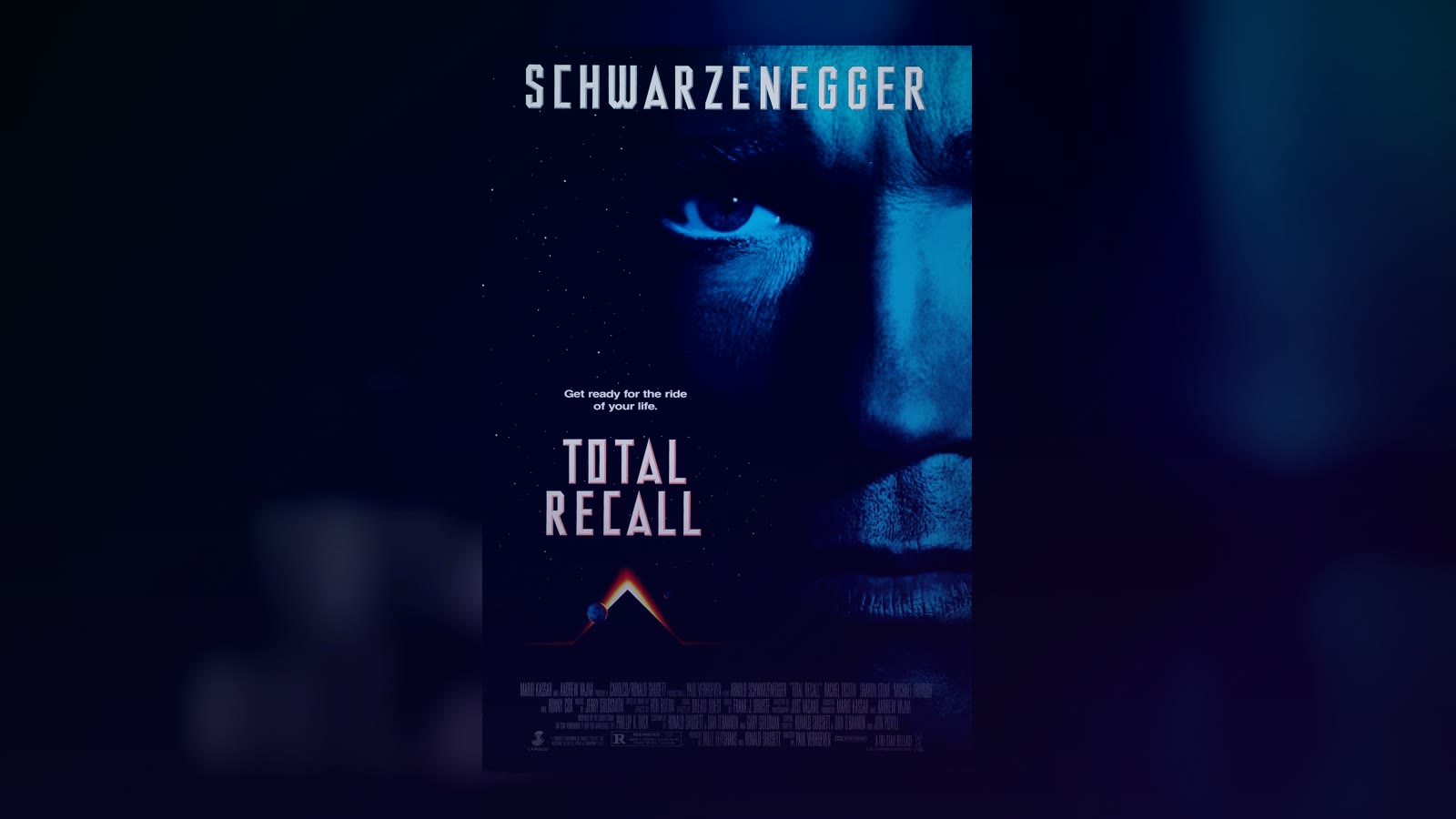
In 1990, director Paul Verhoeven and Arnold Schwarzenegger made one of the most audacious action films ever: a sci-fi thriller about a construction worker who can't trust his own mind, his marriage, or reality itself. Total Recall was a massive production for its time, with practical effects that impressed critics and industry observers. It became a major box office success and remains a textbook example of what blockbuster filmmaking looked like when studios took real risks.
What Made It Great Then—And Still Does
The film's genius is its ambiguity. Schwarzenegger plays Douglas Quaid, a working-class guy with nagging dreams about Mars who visits Rekall, a company that implants false memories. Everything that follows could be real, a fantasy implant, or something in between. The screenplay was by Ronald Shusett, Dan O'Bannon, and Gary Goldman, based on the 1966 short story "We Can Remember It for You Wholesale" by Philip K. Dick and adapted by Ronald Shusett, Dan O'Bannon, and Jon Povill. That uncertainty—the paranoia that you can't trust what you're seeing or who you are—is the entire point. It's not a bug; it's the feature.
Watch it: Total Recall 4K Ultra HD Blu-ray on Amazon (Experience Verhoeven's practical effects and Jerry Goldsmith's score in the best home video quality available)
The action is relentless and inventive. Verhoeven stages set pieces with clarity and momentum; you always know where everyone is and what's happening. The practical effects—from the two-faced alien to the explosive decompression on Mars—still look real because they are real. Jerry Goldsmith's score is one of his best, a synthesizer-driven pulse that sounds like the future the film imagined.
And the lead: Schwarzenegger is perfect. He plays Quaid as a man genuinely confused about his own life, not just a one-liner machine. He's vulnerable. He's thinking. When he kills people, it costs him something. That's a far cry from the Terminator; Quaid is a guy trying to survive and figure out who he actually is. Sharon Stone, Rachel Ticotin, Ronny Cox, and Michael Ironside are all excellent—Stone in particular commits fully to her role as Quaid's wife, never winking at the camera.
What Aged: The Visuals and the Violence
The film is violent and vulgar in ways that critics at the time called gratuitous, and some of that lands differently now. A mutant woman with three breasts; a scene of self-surgery; gore that exists for its own sake—these moments feel more like Verhoeven showing off than serving the story. They don't wreck the film, but they're worth knowing going in.
The miniature work and some of the computer graphics show their age, but not badly. The Mars sets still look like Mars. The practical effects are timeless because they're physical; a guy getting blown apart by decompression looks real whether you saw it in 1990 or 2026.
The Hero at the Center
Quaid is a blue-collar guy—a construction worker. He's not chosen by destiny; he's caught in a trap. He has no special training, no mentor, no superpowers. He survives on instinct, quick thinking, and sheer will. He trusts the woman who helps him (Melina, played by Ticotin) and he acts. He doesn't question whether he deserves to be a hero; he just does what needs doing.
That's the kind of man Hollywood doesn't write anymore. Quaid is competent, decisive, and willing to kill to protect himself and the people counting on him. He doesn't apologize for being a man. He doesn't have a therapy arc. He wins because he's smarter and tougher than his enemies, and because he chooses action over paralysis. Compare that to the hesitation and self-doubt baked into so many modern action heroes, and you see what's changed.
The Ending That Matters
The film ends on ambiguity. Quaid activates the reactor on Mars, saves the colony, and walks off with Melina into a breathable atmosphere—but was any of it real? Is he still in the Rekall chair on Earth, brain-dead? The film suggests both are possible and neither is provable. That refusal to give you a safe answer is radical. Modern filmmaking abhors that kind of uncertainty; it wants to explain everything and tie it up.
Verhoeven and his writers trusted the audience to sit with the question. That trust is part of what makes the film endure.
The 2012 Remake and What Changed
The 2012 remake, also called Total Recall, starred Colin Farrell and attempted to update the story for modern audiences. It had newer technology and bigger budgets but lacked the original's restraint. It didn't trust ambiguity; it explained everything. It didn't trust its lead to carry the film; it cluttered the story with exposition. The remake took a different approach to the material, and audiences responded differently.
How to Watch It Now
Total Recall is available on most major streaming platforms and for purchase on Blu-ray and 4K. The Blu-ray is the best way to see it; the practical effects and cinematography by Jost Vacano deserve the resolution. It's also available on physical media through rental services and libraries.
Is Total Recall worth watching?
A masterclass in sci-fi action filmmaking that holds up remarkably well: inventive, ambitious, and genuinely thought-provoking about identity and reality. Fans of smart action thrillers, practical effects, and Schwarzenegger at his best will find it essential viewing.
Total Recall parents guide: what is it rated, and what age is it for?
Rated R · Best for 16+. Rated R for violence, gore, and language. The film contains graphic violence including gunplay, explosions, and a scene of self-surgery; a mutant character with three breasts; strong language throughout; and intense action sequences. There is no sexual content beyond brief suggestive moments. Some scenes are intense and may be disturbing for younger teens, but the violence serves the story rather than existing for shock value alone.
Is Total Recall woke?
Not woke. The film centers a competent, decisive male hero who earns his victories through skill and determination rather than luck or others' help. Quaid is written as a capable man of action who doesn't apologize for his agency, and the film respects both him and the strong female character (Melina) who assists him as equals. No messaging is pushed; the story is the priority.
Quick answers
Is the ending real or a dream?
The film deliberately doesn't tell you. Verhoeven and the writers leave it ambiguous on purpose—both interpretations are supported by the text. That's the whole point.
How violent and graphic is it?
It's an R-rated action film from 1990 with gore, gunplay, and some sexual content. There are scenes (self-surgery, mutation, decompression) that exist for shock value.
Is Schwarzenegger's performance any good?
Yes. He plays confusion and vulnerability as well as action heroics. It's one of his best roles because he's not just the muscle; he's the emotional center of the film.
Does it hold up better than the 2012 remake?
Yes. The original has ambiguity, practical effects, and trust in the audience. The remake explains everything and fails to capture the paranoia that makes the story work.
Was this worth your time?

Sound off
Disagree all you want, swear if you have to (we'll #@$%! it out). No harassment, slurs, threats, spam or links. Comments are screened before they appear, and you'll get a daily heads-up when the conversation picks up. Your email is never shown.