
The Marfa Lights: Texas' century-old mystery in the desert
Some sightings match car headlights. Others remain unexplained.

This story has affiliate links. If you buy through them, Radazoid may earn a commission at no cost to you. How that works.
The Marfa Lights are real. People have been seeing them near Marfa, Texas, since at least 1883, when settlers in the area first reported flickering lights in the desert. Early observers who investigated found no campfires or other evidence of their source. That disconnect between what people see and what they can prove has defined the mystery ever since.
What people actually see
The lights appear most often from a viewing area on the shoulder of Highway 90, about nine miles east of Marfa. Witnesses describe them as orbs of light—usually yellow-orange, but also green, blue or red—that change in brightness, move in straight lines or stay still, and sometimes split or merge. They float above the desert scrub but below the mesas in the background. Researchers have documented multiple sightings over decades. The first published account appeared in Coronet magazine in July 1957, and the lights have since shown up in a King of the Hill episode and other media.
Get it: Marfa Lights Viewing Guide & Map on Amazon (A reader planning to visit the viewing area would want a detailed guide to the sightings, history, and best viewing tips)
The car-lights explanation (and why it's not the whole story)
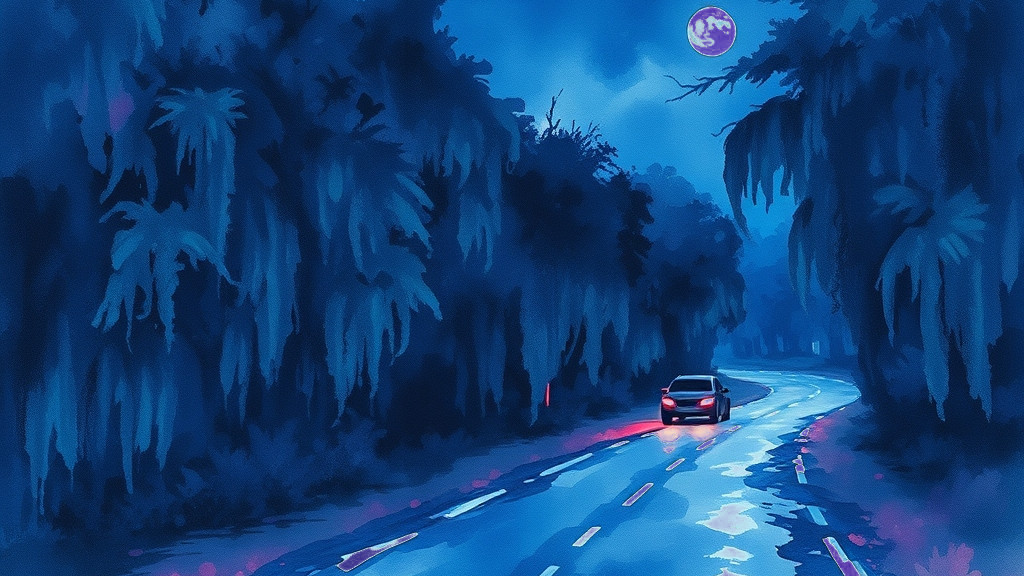
In May 2004, a group of physics students from the University of Texas at Dallas spent four days investigating. They brought traffic-monitoring equipment, video cameras, binoculars and chase cars. Their conclusion: many of the lights they observed southwest of the viewing area matched up with vehicle traffic on U.S. Highway 67, which runs between Marfa and Presidio. When they parked a car on Highway 67 and flashed its headlights, the light was visible from the viewing area and looked like a Marfa light. A car passing their parked vehicle appeared as one Marfa light passing another.
That's solid work. But it doesn't explain every sighting. In May 2008, scientists from Texas State University used spectroscopy equipment to observe lights from the viewing station over 20 nights. They found lights that matched car lights or small fires, but they concluded that the rarer, genuinely odd sightings—the ones with behavior that doesn't match car headlights—needed more research to understand.
The mirage theory
Skeptics point out that the desert around Marfa experiences sharp temperature gradients between cold and warm layers of air. These conditions can create a mirage effect—a Fata Morgana—that distorts distant lights and makes them seem to move or behave strangely. This explains why the lights appear when they do and why they're so hard to pin down. It doesn't mean they're not there; it means what you're seeing is real light bent by the air itself.
Why the mystery endures
Here's the thing: all three explanations are probably partly true. Some lights are car headlights. Some are mirages. Some are small fires. But none of them accounts for every sighting, and the rarest ones—the ones that move wrong, change color in ways headlights don't, or appear when there's no traffic—remain unexplained. That's not a flaw in the research; it's the reason the mystery has lasted since the 1880s and why it matters.
The viewing area itself is honest Americana: a widened shoulder on a desert highway, marked and maintained by the community to draw tourists. You can drive there, park, and watch. You might see nothing. You might see car lights you can't quite convince yourself are car lights. You might see something that makes you understand why settlers over a century ago thought they were looking at something they couldn't explain.
Where to go
The Marfa Lights Viewing Center is on Highway 90 about nine miles east of Marfa. It's free, open to the public, and best visited at night. The lights are most often reported as distant spots of brightness south-southwest of the viewing area, visible between the Big Bend Telephone Company tower and Chinati Peak as you look out from the center. Bring binoculars, a camera, and patience. You're not looking for proof of anything; you're looking for the same thing settlers saw in the 1880s—a light in the desert that doesn't quite make sense.
Quick answers
Are the Marfa Lights real or just car headlights?
Both. Scientists have confirmed that many sightings are car headlights distorted by desert air conditions, but some sightings remain unexplained and don't match that pattern. The mystery is real; the answer is incomplete.
How long have people been seeing them?
Sightings have been reported since at least 1883. The first published account appeared in Coronet magazine in July 1957. Researchers have documented sightings regularly over the past few decades.
Can I see them if I visit the viewing area?
Sightings are regular but not guaranteed on any given night. The viewing area is free, open to the public, and worth the trip even if you see nothing unusual.
What do the lights look like?
Witnesses describe them as orbs of light, usually yellow-orange but sometimes green, blue or red. They change in brightness, move in straight lines or stay still, and occasionally split or merge. They appear above the desert scrub but below the mesas.
Was this worth your time?

Sound off
Disagree all you want, swear if you have to (we'll #@$%! it out). No harassment, slurs, threats, spam or links. Comments are screened before they appear, and you'll get a daily heads-up when the conversation picks up. Your email is never shown.