
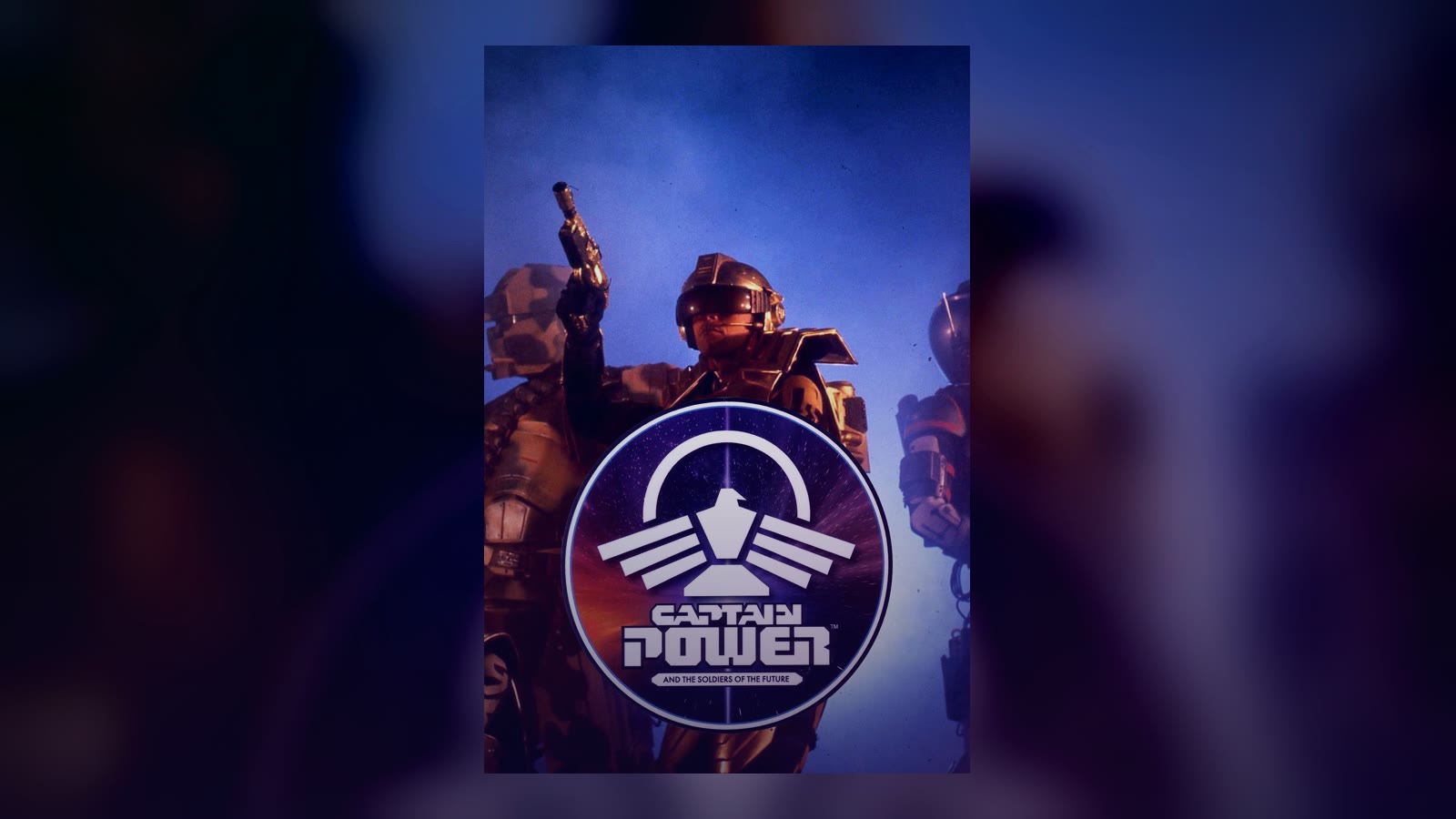
Captain Power and the Soldiers of the Future (1987)
The syndicated sci-fi show that tried to sell you interactive toys while blowing up robots in a post-apocalyptic future
This story has affiliate links. If you buy through them, Radazoid may earn a commission at no cost to you. How that works.
Captain Power holds up as surprisingly dark, ambitious sci-fi for a kids' show, but the toy gimmick and unfinished story leave it more interesting than rewatchable. It tried something no other after-school show dared—real stakes, actual death, and a post-apocalyptic war—but the interactive toy angle and one-season cancellation keep it from being essential viewing in 2026.
If you raced home to catch it on UHF in 1987, you remember the premise: Earth after a machine takeover, where survivors fight back in powered armor suits against Lord Dread's robot armies. You also remember the interactive toys that let you shoot at the screen during battle sequences, racking up points or getting "digitized" when the bad guys hit you back. It was half sci-fi show, half living room arcade game.
Watch it: Captain Power Complete Series DVD on Amazon (The only way to experience the full 1987 run with all interactive toy sequences intact as originally broadcast)
What Was Captain Power About?
The show opens in 2147, fifteen years after a computer network called OverMind launched a war that wiped out most of humanity. The survivors live in hiding while machines hunt them down. Captain Jonathan Power leads a small team of soldiers in powered exosuits, fighting Lord Dread and his Bio-Dread Empire to free humanity and find a way to reverse the digitization process that turns people into data.
The team includes Hawk, the scout and aerial fighter; Tank, the heavy weapons guy; Scout, the infiltration specialist; and Pilot, who flies their mobile base, the PowerBase. Each episode mixed action with the larger arc of humanity's last stand, and the show didn't shy away from showing people actually dying—a rarity for syndicated kids' TV in the 80s.
The Toys That Came With It
The show was built around an interactive toy line. You bought a CapJet or PowerOn suit figure that fired at sensors on your TV during battle scenes. Hit the enemy, you scored points. Get hit, your toy's cockpit popped open and you were out. The VHS tapes and live broadcasts included these sequences, turning every episode into a playable game.
The problem: the toys were expensive, the interactivity was a gimmick that wore thin fast, and kids who didn't own the figures just watched other kids' toys do the playing. The show lasted one season and ended on a cliffhanger that never resolved.
What Aged Well
The show's ambition holds up. Creator Gary Goddard and his team built a serialized sci-fi story with real consequences years before Babylon 5 or the modern streaming era made that normal. Characters died, the war felt hopeless, and Lord Dread—played with scenery-chewing menace by David Hemblen—was a genuinely threatening villain who believed he was saving humanity by erasing it.
The practical effects and model work still look solid. The PowerBase, the CapJets, and the Bio-Dread ground units were real models shot on real sets, and they have weight and texture CGI from that era never matched. The powered suits, while clearly actors in foam latex, sold the idea of walking tanks better than most Saturday morning fare.
The cast played it straight. Tim Dunigan as Captain Power brought the same square-jawed sincerity he'd bring to later roles, and the supporting team felt like actual soldiers, not cartoon archetypes. Fans who remember it still call it one of the most underrated sci-fi shows of the 80s, and it holds a 7.4 on IMDb.
What Didn't Age as Well
The interactive toy sequences stop the story cold. Every episode pauses for two minutes of flashing lights and robot targets while your action figure was supposed to shoot the screen. If you're watching without the toys in 2026, those scenes are dead air—and they happen multiple times per episode.
The pacing drags in the middle stretch. A few episodes lean too hard on the "mission of the week" formula, and the serialized arc doesn't move fast enough to keep you hooked if you're binging it now. The show needed two seasons to pay off its setup; it got one and a cliffhanger that never resolved.
The theme song is pure 80s synth cheese, and not the good kind. You'll remember it if you heard it as a kid, but it's no Voltron or Robotech earworm.
Where to Watch It Now
Captain Power isn't on any major streaming service as of 2026. The complete series is available on DVD as a multi-disc set, and you'll find it floating around secondary markets. Check eBay or Amazon's third-party sellers for copies; prices vary depending on condition.
If you loved it as a kid and want to revisit the memory, the DVD set is worth tracking down for the nostalgia and the bonus features that explain what the second season would have been. If you're coming to it fresh in 2026, it's a curiosity—ambitious, weird, and unfinished, but nowhere near as essential as the other after-school sci-fi that stuck the landing.
Quick answers
Was Captain Power a cartoon or live-action?
Live-action. It was a syndicated sci-fi series with real actors in powered suits, not an animated show, though it aired in the same after-school and Saturday morning slots as cartoons.
How did the interactive toys work?
The toys had infrared sensors that detected flashing light patterns on the TV during battle scenes. Hit the enemy, you scored; get hit, your toy's cockpit popped open and you lost.
Why was Captain Power canceled after one season?
The show ran for one season and ended on a cliffhanger. Reports at the time pointed to disappointing toy sales as the likely reason it wasn't renewed.
Is Captain Power streaming anywhere in 2026?
No. The complete series is available on DVD, but it's not on Netflix, Hulu, Prime Video or any major streaming service as of 2026.
🛒 Born in 1987? Get the “Back in 1987” birthday poster → Radazoid Shop
🖨️ Halloween printables at Printable Barn →
Was this worth your time?





Sound off
Disagree all you want, swear if you have to (we'll #@$%! it out). No harassment, slurs, threats, spam or links. Comments are screened before they appear, and you'll get a daily heads-up when the conversation picks up. Your email is never shown.