
Darth Vader's car: the Buick Grand National story
How a turbocharged V6 coupe in sinister black became the muscle car nobody saw coming
This story has affiliate links. If you buy through them, Radazoid may earn a commission at no cost to you. How that works.
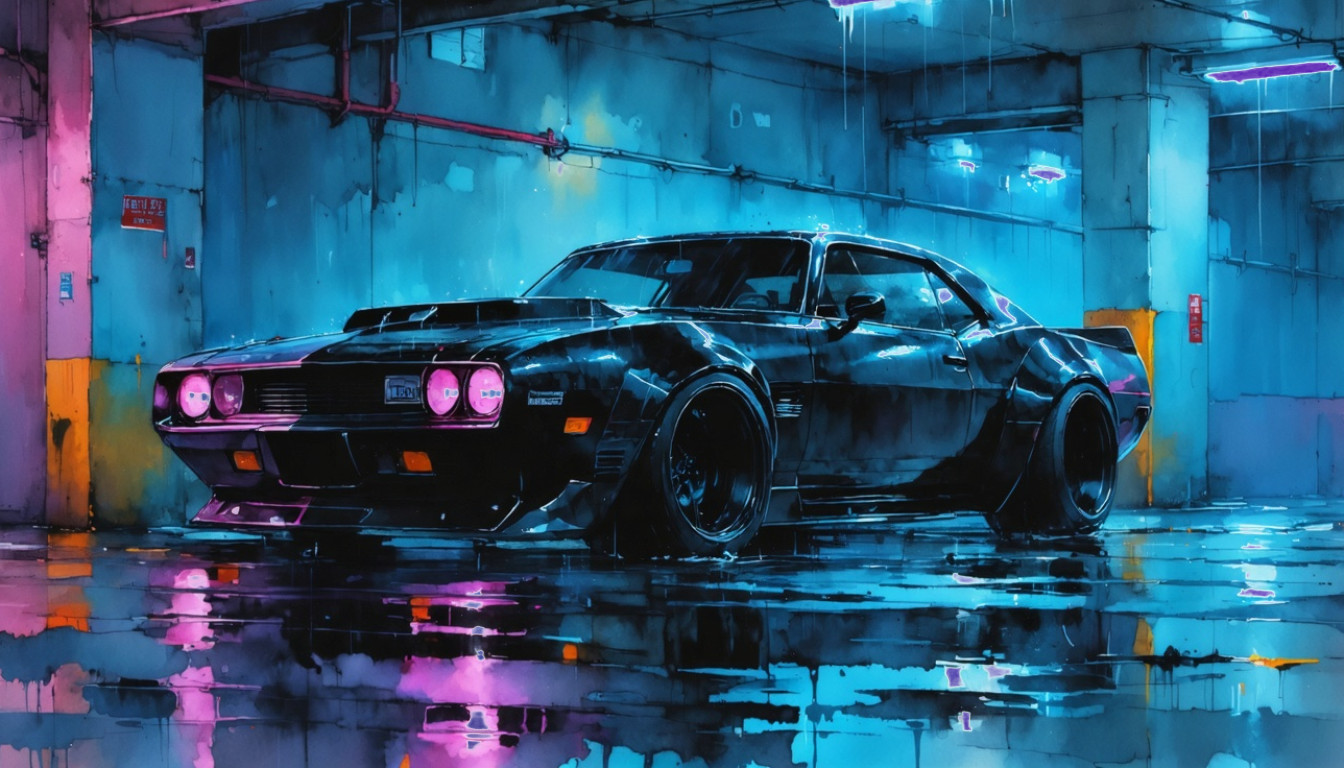
The Buick Grand National was Detroit's last great surprise: a blacked-out coupe with a turbocharged V6 that shocked the world and became one of the most collectible American cars of the 80s. It looked like nothing else on the road, it was brutally quick for its time, and it proved that muscle didn't need eight cylinders or a Camaro badge.
If you grew up in the 80s, you remember the first time you saw one roll by: all black, no chrome, turbo whistle and a menacing stance that earned it the Darth Vader nickname. It was the anti-Corvette, the sleeper that didn't look like it wanted your attention until it was already gone. Decades later, clean examples command serious money, and the rarest version—the GNX—is the crown jewel every collector wants.
Where did the Grand National come from?
Buick built the Grand National from 1982 to 1987 as a performance version of the Regal, dressed entirely in black: black paint, black wheels, black interior, subtle badges. No stripes, no spoilers, no flash. Just menace.
Under the hood sat a turbocharged 3.8-liter V6—not the V8 you'd expect in a muscle car. That turbo six made it shockingly quick in a straight line, and it did it with a sound that was part whistle, part growl. It was the last rear-wheel-drive Regal, the last turbo Buick, and the last time the brand built something this unapologetically cool.
What made the GNX special?
The GNX was the Grand National's ultimate version: built in 1987 in limited numbers. Buick worked with outside performance specialists to turn it into a proper send-off. They upgraded the turbo, the suspension, the transmission, added fender vents, and bolted on unique wheels. It was even more brutal off the line, and it looked meaner.
Production was extremely limited—built in tiny numbers, all black, all numbered. Reports say they were sold through select dealers, often at premiums. Today, the GNX is the crown jewel of 80s American performance, the one every collector wants, and the one that brings serious money when a clean example shows up.
Why is it so collectible now?
The Grand National hit at the perfect moment: the tail end of the muscle car dark ages, right before fuel injection and computers took over. It was fast, it was rare, it was different, and it disappeared before most people realized what they were looking at. That makes it catnip for collectors now.
Clean examples are hard to find. Most were driven hard, modified, or neglected. Survivors with low miles, stock parts, and solid bodies command steep prices. The GNX is the trophy, but even a standard Grand National in good shape is worth real money. To check current values, search eBay's sold listings for recent sales and condition.
Buyers today need to watch for rust, check the turbo and transmission for wear, and verify the car hasn't been hacked up with cheap mods. Original examples are the ones that hold value. If you're serious about owning one, budget for maintenance—these are 80s turbo cars, not Camrys.
What was it like to see one in the 80s?
If you were a car kid in the 80s, the Grand National was the unicorn. It showed up in magazines, posters, and the occasional sighting at a stoplight, and it looked like it came from a different planet than the beige sedans and minivans everywhere else. It was proof that Detroit could still build something dangerous when it wanted to.
The all-black look was intimidating in a way nothing else matched. No racing stripes, no loud graphics—just a shape that looked fast sitting still and a turbo that made a sound you didn't forget. It was the car you pointed at in traffic and the one your dad said cost too much. It was cooler than a Camaro, meaner than a Mustang, and gone before most people got the chance to buy one.
Should you buy one today?
If you have the budget and the patience, yes. The Grand National is one of the last true muscle cars Detroit built before everything went front-wheel-drive and soft. It's usable, fixable, and genuinely quick even by modern standards. Parts are out there, the community is strong, and a good one will only get more valuable.
Expect to pay serious money for anything clean, more for a GNX, and be ready to walk away from rough examples or cars with questionable history. Check for rust in the usual spots, verify the turbo setup is stock or properly built, and make sure the interior isn't trashed. A solid Grand National is a forever car—one you'll never get bored of and one your kids will fight over when you're gone.
For reference material and maintenance, consider a good reference book on the model's history, quality replacement parts when the time comes, and a diecast model for the desk while you hunt for the real thing.
Quick answers
When was the Buick Grand National built?
The Grand National was built from 1982 to 1987 as a performance version of the Regal. The final and rarest version, the GNX, came in 1987.
Why was the Grand National called Darth Vader's car?
The all-black look—black paint, black wheels, black interior, no chrome—gave it a sinister, menacing appearance that earned the Darth Vader nickname among fans and the press.
What's the difference between a Grand National and a GNX?
The GNX was the final, upgraded version of the Grand National, built in 1987 in limited numbers with more power, upgraded suspension and transmission, unique wheels and vents, and all were numbered.
How much is a Buick Grand National worth today?
Values vary widely by condition, mileage and originality. Clean, stock examples bring strong money, and the GNX commands the highest prices. Check eBay sold listings and classic car auction results for current market values.
Was this worth your time?
Sound off
Disagree all you want, swear if you have to (we'll #@$%! it out). No harassment, slurs, threats, spam or links. Comments are screened before they appear, and you'll get a daily heads-up when the conversation picks up. Your email is never shown.