
Is The Legend of Zelda: A Link to the Past still good?
The SNES classic defined action-adventure games, but does it still deliver three decades later?
This story has affiliate links. If you buy through them, Radazoid may earn a commission at no cost to you. How that works.
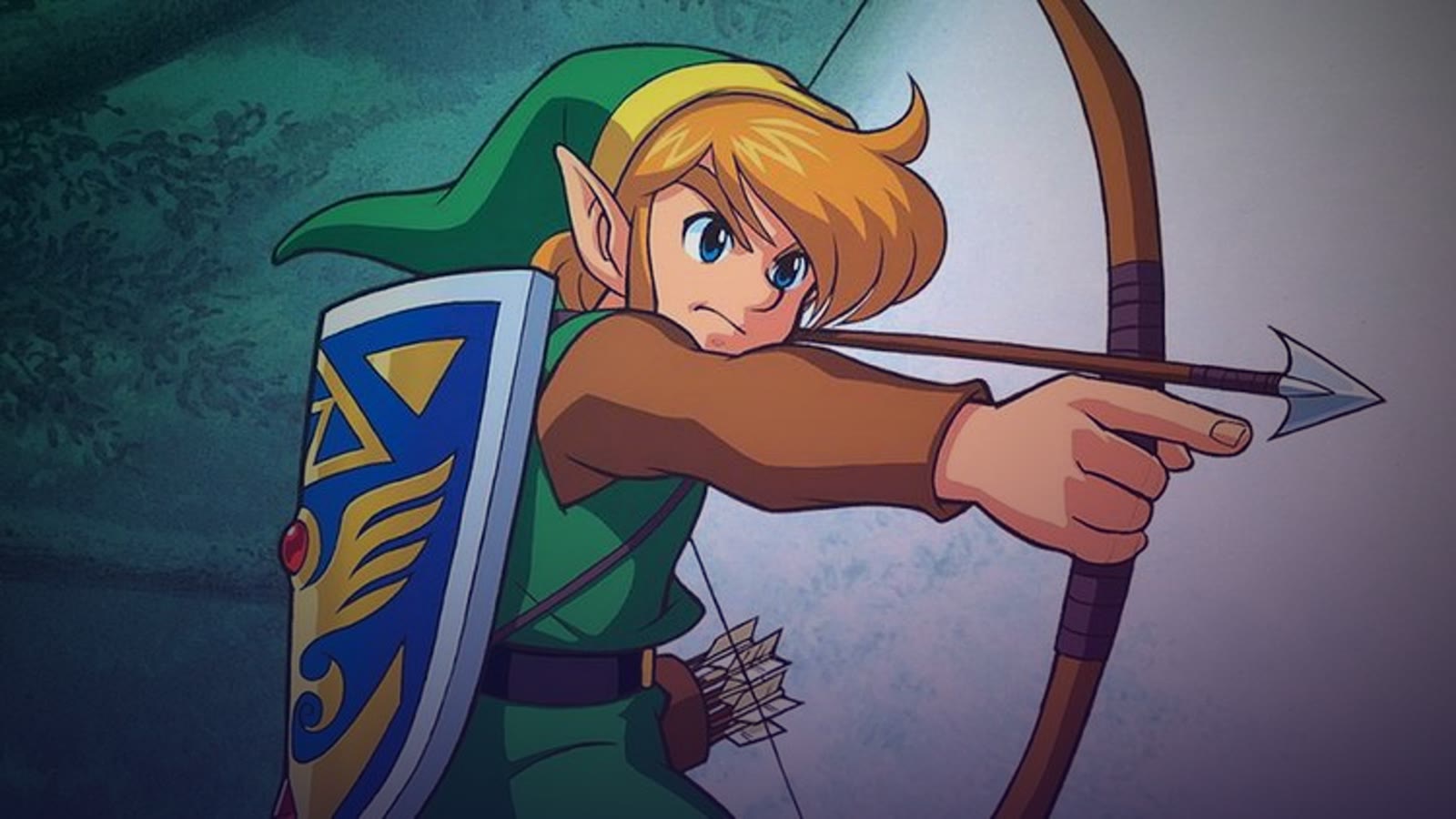
A Link to the Past is still excellent. The combat is tight, the dungeons are smart, the pacing never drags and the Dark World twist halfway through still lands. It's the blueprint every Zelda game since has followed, and it holds up because the fundamentals—exploration, puzzle-solving, progression—were nailed down perfectly in 1991. If you loved it as a kid, it's just as good now. If you missed it, it's still the best entry point into the series.
What made A Link to the Past a classic
A Link to the Past launched on the Super Nintendo in April 1991 and redefined what an adventure game could be. The original Legend of Zelda on NES was groundbreaking but cryptic. Zelda II went sideways with RPG mechanics and side-scrolling combat. A Link to the Past brought the series back to the top-down view, added structure without losing freedom, and built a world that felt huge without wasting your time.
The game opens with Link sneaking into Hyrule Castle in a rainstorm to rescue Princess Zelda. From there, you're hunting down three pendants, pulling the Master Sword from the forest, and then—halfway through—the game flips the entire map into the Dark World, a twisted mirror dimension where every location has a new puzzle or dungeon. It was a massive surprise in 1991, and it still works because the game never telegraphs it.
The dungeons are the heart of the experience: eleven total, each with a unique hook, a new item that changes how you play, and a boss that forces you to use it. The Ice Palace requires precision. Turtle Rock is a brutal endgame gauntlet. Ganon's Tower brings it all together. The difficulty curve is fair, the puzzles are clever without being obtuse, and the items—hookshot, fire rod, ice rod, Cane of Somaria—all feel useful beyond the dungeon you find them in.
The soundtrack, composed by Koji Kondo, is iconic: the overworld theme, the Dark World theme, Ganon's battle music. The 16-bit graphics were peak SNES—colorful, detailed, expressive—and the animation still has personality. Link's spin attack, the way enemies react when hit, the way the world shifts when you move between dimensions: it all feels deliberate and polished.
What still works today
The gameplay loop is timeless. You explore, find a dungeon, get a new item, use that item to reach new areas, repeat. The map opens up gradually without ever feeling like a grind. Secrets are everywhere—hidden caves, heart pieces, upgrades—and the game rewards curiosity. The combat is simple but satisfying: sword, spin attack, items. Nothing feels cheap, and every enemy has a pattern you can learn.
The pacing is better than most modern open-world games. There's no filler, no fetch quests, no padding. You're always moving forward, always unlocking something new. The Dark World twist keeps the second half from feeling like a retread, and the endgame—Ganon's Tower and the final boss fight—is still a satisfying payoff.
The controls are tight. Link moves exactly how you expect, the sword swing is instant, and the game never punishes you for the hardware's limitations. The difficulty is fair: tough enough to make you think, forgiving enough that you're never stuck for long. The hint system—talking to NPCs, reading signs—gives you just enough direction without holding your hand.
Compared to later Zelda games, A Link to the Past is lean. No long tutorials, no constant interruptions, no motion controls or gimmicks. You start the game, you're in the action within two minutes, and the game trusts you to figure things out. It's the opposite of hand-holding, and it's refreshing.
What aged badly (not much)
The inventory system is clunky by modern standards. You have to pause and swap items constantly because the SNES controller only had so many buttons. It's not a dealbreaker, but after playing Breath of the Wild or Tears of the Kingdom, it feels slow.
Some late-game dungeons can be tedious if you don't have a map or guide. Turtle Rock and Ice Palace, in particular, have layouts that are easy to get lost in, and the game doesn't always make it clear where to go next. It's not unfair—it's designed for exploration—but it can test your patience if you're rusty.
The story is bare-bones. Zelda gets kidnapped, Ganon is evil, you're the hero. That's it. There's no character development, no emotional beats, no twists beyond the Dark World reveal. If you're coming from modern Zelda games with cutscenes and voice acting, this will feel sparse. But the gameplay is the story, and the game never pretends otherwise.
How to play it now
A Link to the Past is available on Nintendo Switch Online, the service that gives you access to NES and SNES games. If you're already subscribed, it's the easiest way to play. The Switch version runs perfectly, supports save states, and lets you rewind if you make a mistake (which purists will ignore, but it's there).
If you want a physical option, the game was re-released on Game Boy Advance in 2002 as part of a cartridge that also included Four Swords, a multiplayer mode. The GBA version is solid but slightly downgraded in graphics and sound. Loose cartridges sell for varying amounts on eBay; check sold listings for current going rates.
The original SNES cartridge is the definitive version. If you still have a working Super Nintendo or picked up the Super NES Classic Edition (the plug-and-play retro console Nintendo released in 2017), A Link to the Past is included. The Classic Edition is no longer in production, but it shows up on resale markets; again, check eBay sold listings for current prices.
For retro purists, playing on original hardware with a CRT TV is the ideal experience—the pixel art was designed for those screens—but the Switch version is perfectly fine for everyone else.
The verdict for grown-ups who loved it as kids
A Link to the Past is still one of the best games ever made. It's not nostalgia talking: the design is rock-solid, the dungeons are brilliant, and the game respects your time. If you played it in 1991 and haven't touched it since, it's worth revisiting. If you're introducing it to your kids, it's a better starting point than Breath of the Wild because it teaches the fundamentals without overwhelming them.
The only reason not to play it is if you've already burned through it multiple times and want something new. Otherwise, it's essential. It's the game that proved Nintendo could take a franchise, refine it, and set a standard that would last decades. Every Zelda game since has been chasing what A Link to the Past nailed on the first try.
For more retro deep dives, check out our look at whether Super Mario Bros. 3 still holds up, and our guide to gifts for dads who grew up on Nintendo.
Quick answers
Is A Link to the Past harder than modern Zelda games?
It's tougher than Breath of the Wild or Tears of the Kingdom but fair. Dungeons require more puzzle-solving, and the game doesn't hold your hand with constant hints.
Do I need to play the original Zelda first?
No. A Link to the Past is a standalone story and a better starting point than the NES original.
How long does it take to beat?
Most players finish the main story in 12 to 15 hours. Completionists hunting every heart piece and upgrade will spend closer to 20.
Is the GBA version worth playing instead of the SNES original?
The SNES version is better—sharper graphics, better sound. The GBA port is solid but slightly downgraded, and the Four Swords bonus mode is skippable.
Was this worth your time?



Sound off
Disagree all you want, swear if you have to (we'll #@$%! it out). No harassment, slurs, threats, spam or links. Comments are screened before they appear, and you'll get a daily heads-up when the conversation picks up. Your email is never shown.