
The DeLorean DMC-12: the flop that Back to the Future made immortal
How a failed sports car became immortal thanks to Back to the Future
This story has affiliate links. If you buy through them, Radazoid may earn a commission at no cost to you. How that works.
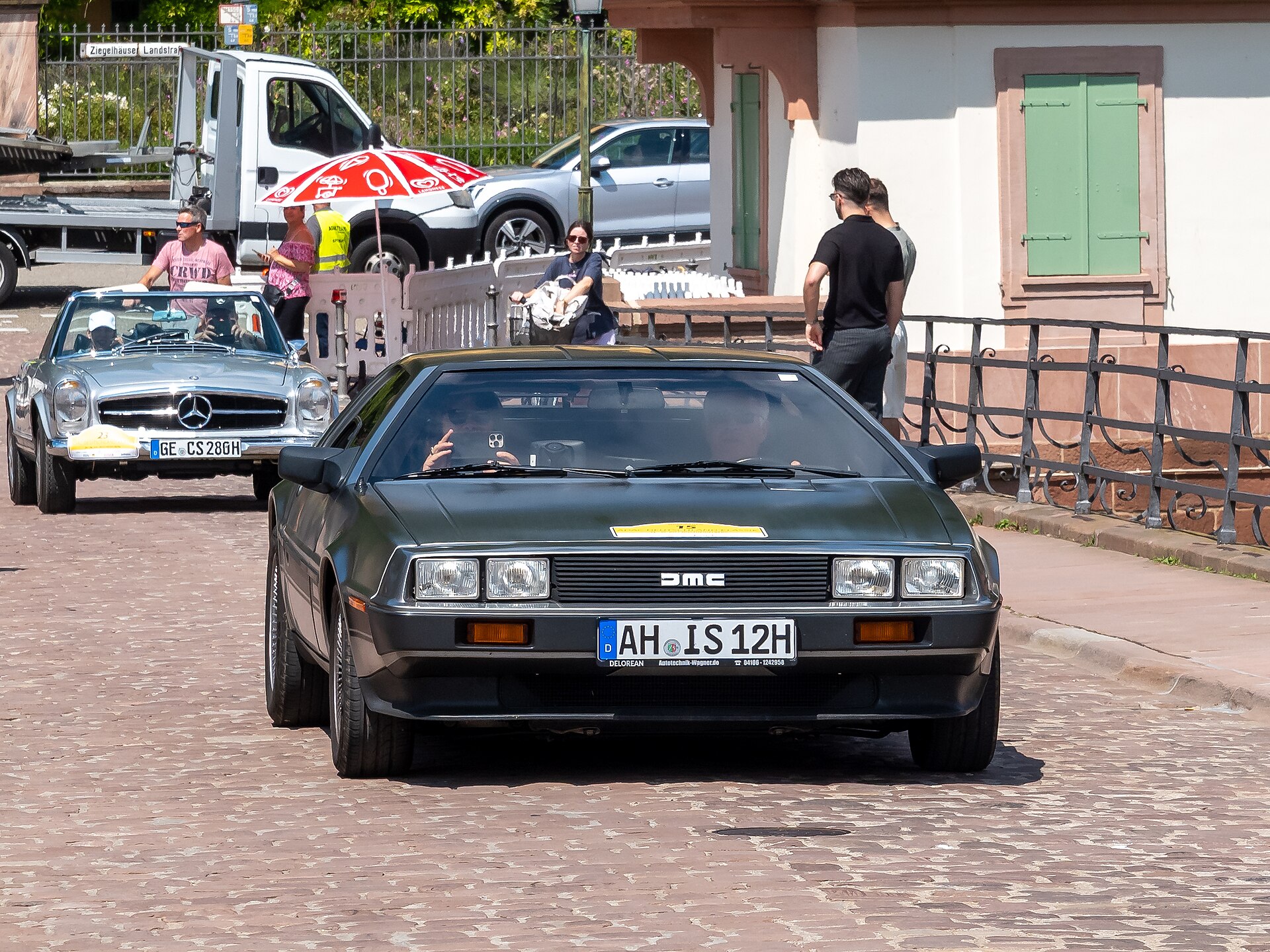
The DeLorean DMC-12 was supposed to be the future of sports cars: stainless steel body, gullwing doors, a maverick entrepreneur's dream. Instead, it became one of the automotive industry's most spectacular failures. Then a teenager and a mad scientist climbed into one in 1985, hit 88 mph, and suddenly the car that almost nobody wanted became the ride every kid in America recognized. The DMC-12 didn't succeed as transportation, but it won as a time machine, and that's the legacy that stuck.
What made the DeLorean DMC-12 different from every other sports car?
John DeLorean was a GM golden boy who walked away to build his own dream car, and he wanted it to look like nothing else on the road. The DMC-12 debuted in early 1981 with an unpainted brushed stainless steel body that never needed a wash and never rusted, gullwing doors that swung up instead of out, and a mid-mounted engine behind the seats. The design came from Giorgetto Giugiaro, the Italian legend who penned the Lotus Esprit and the original VW Golf. It looked futuristic, low and wedge-shaped, like it belonged in a sci-fi movie even before it ever appeared in one.
The chassis was a fiberglass underbody with a steel backbone frame, and the whole thing was built in Belfast, Northern Ireland, in a factory funded by the British government as a jobs program in a war-torn region. DeLorean promised a revolutionary car that would be safe, efficient and exciting. What he delivered was striking to look at and expensive to build, but not particularly quick.
Why did the DeLorean fail as a car company?
The DMC-12 was supposed to be a performance car, but the engine was a letdown. DeLorean originally planned a mid-mounted rotary or a turbocharged four-cylinder, but emissions and reliability concerns killed both. He settled on a Peugeot-Renault-Volvo V6 that was adequate in a sedan but underwhelming in a two-seater that looked this aggressive. The car was heavy for its size, and reviewers at the time called it slow and unrefined compared to Corvettes and Porsches that cost about the same.
The sticker price started around $25,000 in 1981, which was serious money then, and quality control out of the Belfast plant was inconsistent. Doors didn't always align, panels had gaps, and electrical gremlins were common. Sales were weak from the start, and by late 1982 the company was out of cash. John DeLorean was arrested in October 1982 in a federal drug sting (he was later acquitted, claiming entrapment), and the company collapsed. The factory closed in early 1983 after building somewhere in the neighborhood of 9,000 cars over about two years. Most of them made it to the U.S., and a surprising number are still around.
How did Back to the Future save the DeLorean's reputation?
In 1985, two years after the company died, Back to the Future hit theaters and changed everything. Director Robert Zemeckis and writer Bob Gale needed a time machine that looked futuristic and weird, and the DeLorean's stainless steel body and gullwing doors were perfect. Doc Brown turned a failed sports car into the coolest vehicle in movie history, and suddenly every kid who saw the movie wanted one. The car that couldn't sell when it was new became a star, and the DMC-12's legacy flipped from embarrassing flop to beloved icon.
The movie gave the car a second life in the public imagination. LEGO sets, die-cast replicas, posters, and every kind of merchandise kept the DeLorean in front of new generations long after the company vanished. Fans started restoring and modifying survivors, and a company in Texas even bought the DeLorean name and remaining parts stock to support owners and build limited continuation cars. The DMC-12 that flopped in showrooms in 1981 became one of the most recognizable cars in the world because of three movies.
What should you know if you want to buy a DeLorean today?
DeLoreans are out there, and they're not as rare as you'd think given how few were made. Most survivors are in the hands of enthusiasts who keep them running, and there's a dedicated parts and service network. Prices vary widely depending on condition, mileage and originality, so check recent eBay sold listings and enthusiast forums to see what they're trading for right now. Expect to pay a premium for low-mileage, unmodified examples, and budget less for higher-mileage drivers or cars that need work.
Before you buy, know what you're getting into. The V6 is reliable if maintained, but it's not fast by modern standards or even by the standards of the early 80s. Parts are available but not always cheap, and you'll want a mechanic who knows these cars or the patience to learn yourself. The stainless body doesn't rust, but it does scratch and dent, and it's expensive to repair correctly. Electrical issues are common, and the gullwing doors require adjustment to open and close smoothly. If you're buying one to drive and enjoy rather than to flip, and you understand it's more about the experience and the looks than the performance, a DeLorean can be a rewarding classic.
There's also a small world of die-cast DeLorean models and kits for collectors who want the icon without the maintenance. Hot Wheels, Jada, and others have made excellent replicas, and the LEGO Back to the Future set is one of the best movie car builds they've ever released.
Why does the DeLorean still matter?
The DMC-12 is a reminder that a car doesn't have to succeed in the showroom to win in the culture. It was too expensive, too slow, and too flawed to compete when it was new, and the company that built it collapsed in scandal and debt. But it looked like nothing else, and when the right movie came along, that look became timeless. For guys who grew up in the 80s, the DeLorean isn't just a car; it's the time machine, the symbol of the decade's optimism and weirdness and love of the future. It failed as a business, but it succeeded as a legend, and that's a legacy John DeLorean probably never imagined.
Quick answers
How many DeLorean DMC-12s were made?
The Belfast factory built roughly 9,000 cars between 1981 and early 1983 before the company collapsed. Most were sold in the U.S., and a surprising number survive today.
Why was the DeLorean so slow?
The DMC-12 used a Peugeot-Renault-Volvo V6 that was adequate but not powerful, and the car was heavy for a two-seater. Reviewers at the time called it underwhelming compared to Corvettes and Porsches at the same price.
Are DeLoreans expensive to maintain?
Parts are available through specialty suppliers, but they're not always cheap. The stainless body doesn't rust, but it's expensive to repair, and electrical issues are common. A dedicated mechanic or DIY patience helps.
Can you still buy a new DeLorean?
A company in Texas owns the DeLorean name and parts inventory and has built limited continuation cars, but they're rare and expensive. Most buyers are shopping for original survivors from the early 80s.
Was this worth your time?
Sound off
Disagree all you want, swear if you have to (we'll #@$%! it out). No harassment, slurs, threats, spam or links. Comments are screened before they appear, and you'll get a daily heads-up when the conversation picks up. Your email is never shown.