
NHRA drag racing legends: Don Garlits and John Force
Two legends who transformed drag racing from backyard hobby to high-speed spectacle.

This story has affiliate links. If you buy through them, Radazoid may earn a commission at no cost to you. How that works.
Drag racing is the only motorsport where you can go from zero to a hundred and thirty miles per hour before you finish your coffee. The NHRA—the National Hot Rod Association, founded in 1951—is the governing body that made it safe, organized and legendary. And two men defined it: Don Garlits, the godfather of the sport, and John Force, the most dominant racer in modern drag racing history.
Don Garlits: The Man Who Lost His Foot and Saved His Life
Donald Glenn Garlits was born in Tampa, Florida, on January 14, 1932. He called it the Swamp Rat, a name that would stick to every dragster he ever built.
Get it: Don Garlits: The King of Drag Racing on Amazon (Garlits' own memoir tells the full story of building Swamp Rat, losing his foot, and revolutionizing dragster design)
Garlits spent the 1950s and 1960s proving that Florida racers could run with the California crowd. When he showed up at the March Meet in Bakersfield in 1959 with over 30,000 people watching, he proved drag racing was bigger than any single coast.
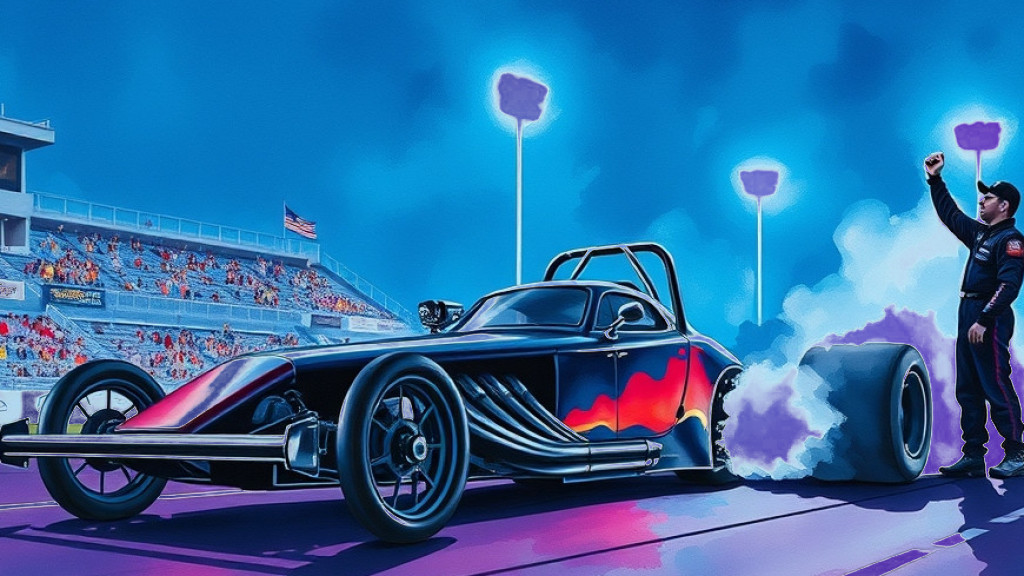
But the real story came on March 8, 1970, at Lions Drag Strip. Garlits was driving the front-engined Swamp Rat XIII when the two-speed transmission he was developing exploded. It took part of his right foot clean off and snapped the car in half. Most men would have quit. Garlits went to his shop in Seffner on a wheelchair, picked up a band saw, and drew up plans for something that would change drag racing forever: the rear-engine dragster.
When Garlits returned in 1971 with Swamp Rat XIV, the rodding magazines thought he was crazy. The design looked wrong. But it worked. By putting the engine and fuel tank behind the driver instead of in front of him, Garlits made the car safer and faster. Every modern dragster is built on his innovation.
Garlits won three NHRA Top Fuel Championships, ten AHRA championships, and four IHRA championships—17 total. He won his last championship well into his fifties.
John Force: Multiple Titles and a Dynasty
John Force was born in Bell Gardens, California, on May 4, 1949. He grew up poor—logging camps, migrant farms, trailer parks—and survived polio as a kid. He began his drag racing career in 1971 with a funny car.
Force won NHRA championships in 1990 and 1991, then a dominant stretch of consecutive titles from 1993 to 2002, plus additional championships in 2004, 2006, 2010, and 2013. Drivers accused him of cheating. He was willing to strip off his firesuit to prove he wasn't.
Force has 157 career victories as a driver and is also a 24-time champion car owner through John Force Racing, the team he founded in 1996.
Force's three daughters—Ashley, Brittany, and Courtney—are all drag racers. His ex son-in-law Robert Hight is also a Funny Car champion. Together, they are known as "The First Family of Drag Racing."
What Made Them Different
Garlits was an engineer first, a racer second. He didn't just drive faster; he figured out why and built a better car. His rear-engine design was so revolutionary that it became the standard for all dragsters. He proved that innovation beats horsepower.
Force was a competitor who won through sheer will and consistency. He didn't invent the Funny Car, but he dominated it like no one else. Multiple consecutive championships is not a lucky streak—that is a man and a team firing on all cylinders for a decade. He built a racing organization that outlasted him and still runs today.
Both men came from nothing. Both refused to quit when it got hard. Both changed their sport forever.
The NHRA Today
The NHRA sanctions tens of thousands of drivers and runs national events through the Mission Foods Drag Racing Series. There are four professional classes: Top Fuel Dragster, Funny Car, Pro Stock, and Pro Stock Motorcycle. The U.S. Nationals are held at Lucas Oil Raceway in Brownsburg, Indiana. Winners receive "The Wally," a trophy named after NHRA founder Wally Parks.
In 2026, the NHRA is celebrating its 75th anniversary.
Why It Matters
Drag racing is American. It came from hot-rodders and garage guys who wanted to go fast on a straight line. The NHRA took that impulse and turned it into a sport with rules, safety and respect. Garlits and Force are the two men who proved that drag racing was not just dangerous street racing—it was a legitimate sport for legitimate athletes.
If you want to understand what American motorsport is, you need to understand drag racing. And if you want to understand drag racing, you need to know Don Garlits and John Force.
Quick answers
Who is Don Garlits?
Don Garlits, born January 14, 1932, in Tampa, Florida, is known as "Big Daddy" and the godfather of drag racing. He won three NHRA Top Fuel Championships and pioneered the rear-engine dragster design after losing part of his foot in a 1970 accident—a design that became the standard for all modern dragsters.
Who is John Force?
John Force, born May 4, 1949, in Bell Gardens, California, is the most dominant Funny Car driver in NHRA history with multiple championships and 157 career victories. He won championships in 1990, 1991, then a dominant stretch of consecutive titles from 1993 to 2002, plus additional titles in 2004, 2006, 2010, and 2013, and founded John Force Racing, which remains one of the top teams in drag racing.
What is the NHRA?
The National Hot Rod Association, founded in 1951, is the governing body for drag racing in North America. It sanctions tens of thousands of drivers and runs national events through the Mission Foods Drag Racing Series, with four professional classes: Top Fuel Dragster, Funny Car, Pro Stock, and Pro Stock Motorcycle.
What made Garlits' rear-engine dragster so important?
In 1971, Garlits introduced the rear-engine dragster design, which put the engine and fuel tank behind the driver instead of in front. This made the car safer and faster by protecting the driver from mechanical failure, and it became the standard design for all modern dragsters.
Was this worth your time?




Sound off
Disagree all you want, swear if you have to (we'll #@$%! it out). No harassment, slurs, threats, spam or links. Comments are screened before they appear, and you'll get a daily heads-up when the conversation picks up. Your email is never shown.