
The 1980 Miracle on Ice: how a college team beat the Soviet Union and won Olympic gold
College kids defeated the seemingly unbeatable Soviet hockey team during the Cold War.
This story has affiliate links. If you buy through them, Radazoid may earn a commission at no cost to you. How that works.
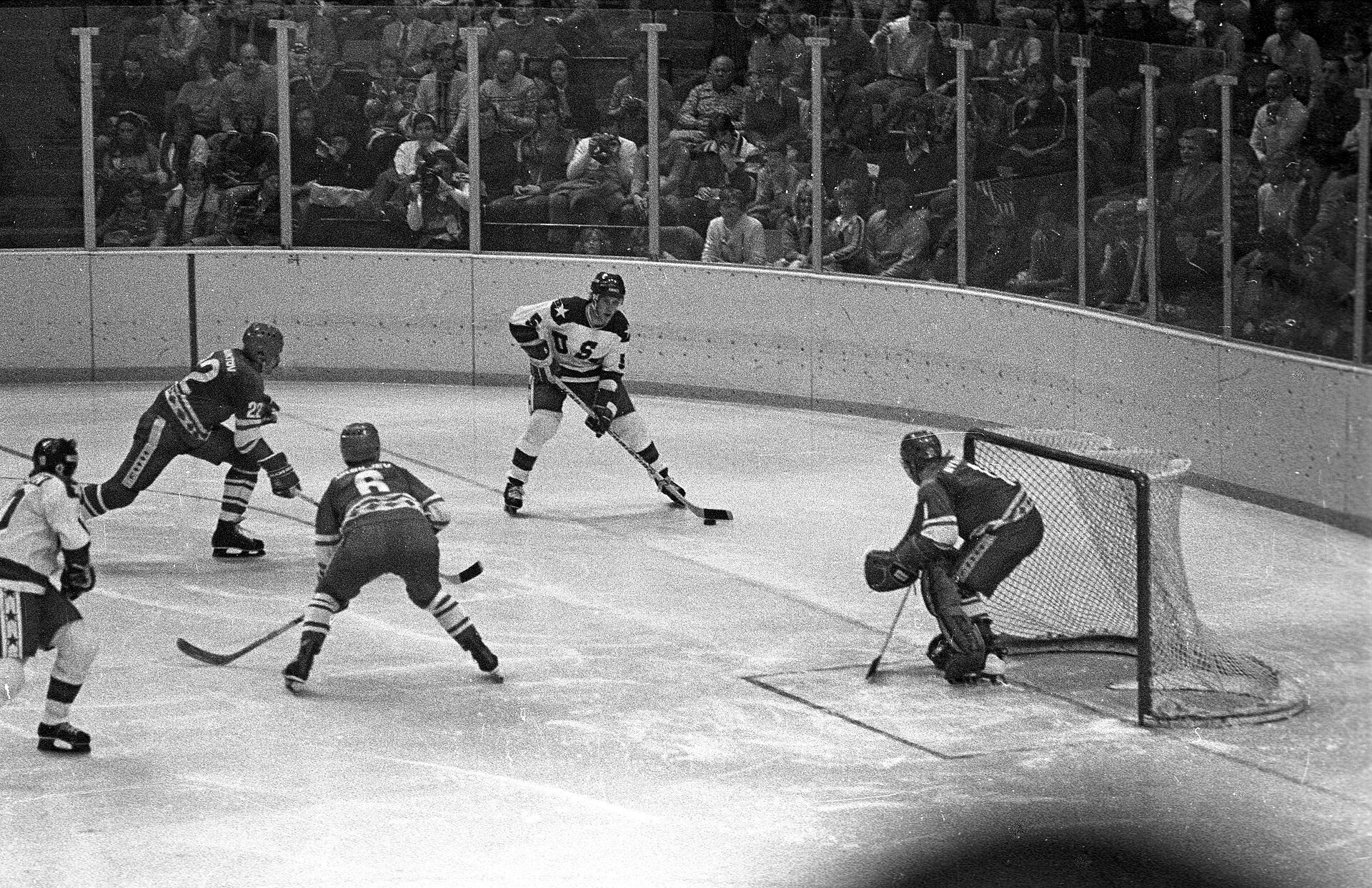
On February 22, 1980, in Lake Placid, New York, the United States men's ice hockey team defeated the Soviet Union 4–3 in what became known as the "Miracle on Ice." It was the upset that defined a generation, and it was about far more than a medal.
Why the Soviets were supposed to dominate
The Soviet Union came to Lake Placid as the heavy favorite. They had won gold medals in four consecutive Winter Olympic Games (1964, 1968, 1972, 1976). In head-to-head matchups against the United States over that period, the Soviets dominated. The Soviet team had not lost a game in Olympic play since 1968.
Get it: Miracle on Ice DVD/Blu-ray on Amazon (Watch the actual game footage and relive the greatest upset in sports history that defined a generation)
The Soviets were loaded with legendary players: Boris Mikhailov (team captain and top line right winger), Vladislav Tretiak (the consensus best goaltender in the world), the speedy Valeri Kharlamov, defenseman Viacheslav Fetisov, and forwards Vladimir Krutov and Sergei Makarov. Tretiak, Kharlamov, Makarov, and Fetisov were all eventually enshrined in the Hockey Hall of Fame. These weren't amateurs—they were de facto professionals employed by Soviet industrial firms and military organizations for the sole purpose of playing hockey. They had years of international experience and played together as a unit.
Who the Americans really were
The U.S. team, led by head coach Herb Brooks, was composed almost entirely of amateur players. The average age was 21 years, making it the youngest team in U.S. Olympic history and the youngest team in the 1980 tournament.
Brooks held tryouts in Colorado Springs in the summer of 1979. Of the 20 players who made the final roster, only Buzz Schneider returned from the 1976 Olympic team. Nine had played under Brooks at the University of Minnesota (including Rob McClanahan, Mike Ramsey, and Phil Verchota). Four more were from Boston University (Dave Silk, Jack O'Callahan, goaltender Jim Craig, and team captain Mike Eruzione). Brooks built the team to compete as a unit under pressure, selecting players who could respond to his demanding coaching style.
The game itself
In the group stage, both teams were undefeated. The Americans had already pulled off a couple of surprises: a draw against Sweden and an upset victory over second-place favorite Czechoslovakia. The Soviets rolled through their group without breaking a sweat.
The medal round matchup was the first game. The Americans tied it 2–2 after the first period. The Soviets took a 3–2 lead in the second. Then, midway through the third period, the U.S. team scored two more goals to take their first lead. They held on to win 4–3.
Two days later, the U.S. beat Finland to clinch the gold medal. The Soviets took silver with a victory over Sweden. Mark Johnson, who led the Americans in scoring, was named tournament MVP.
Why it mattered so much
This wasn't just a hockey game. The Lake Placid Games took place in the shadow of the Cold War. In December 1979, the Soviet Union had invaded Afghanistan. U.S. President Jimmy Carter was considering boycotting the 1980 Summer Olympics in Moscow. The Iranian hostage crisis was ongoing. The world felt tense and divided.
When that college team beat the Soviets, it felt like America had won something bigger than a medal. It felt like a statement. The team was named Sports Illustrated's Sportsmen of the Year and the Associated Press Athlete of the Year in 1980. In 1999, Sports Illustrated named the "Miracle on Ice" the top sports moment of the 20th century. In 2008, the International Ice Hockey Federation named it the best international ice hockey story of the past 100 years.
Defenseman Ken Morrow went on to win a Stanley Cup with the New York Islanders later that year, becoming the first player in NHL history to win a Stanley Cup and an Olympic gold medal in the same year. Congress recognized the members of the team with the Congressional Gold Medal.
What it means now
New York state is funding a monument to the game in Lake Placid, with recent announcements about the project's advancement. The story keeps getting told because it meant something real at a moment when America needed it. The famous television call by Al Michaels for ABC—"Do you believe in miracles? Yes!"—remains one of the most iconic moments in sports broadcasting.
Quick answers
What was the final score?
The United States defeated the Soviet Union 4–3 on February 22, 1980.
Did the U.S. win the gold medal?
Yes. After beating the Soviets, the U.S. defeated Finland in their final game to clinch the gold medal.
Who was the coach?
Herb Brooks coached the U.S. team. He built a team of mostly amateur college players that could compete as a unit under pressure.
How old was the team?
The average age was 21 years, making it the youngest team in U.S. Olympic history.
Was this worth your time?









Sound off
Disagree all you want, swear if you have to (we'll #@$%! it out). No harassment, slurs, threats, spam or links. Comments are screened before they appear, and you'll get a daily heads-up when the conversation picks up. Your email is never shown.