
Porsche 959 buying guide: technology, ownership and what to inspect
What made Porsche's revolutionary supercar so ahead of its time—and why it still matters today.
This story has affiliate links. If you buy through them, Radazoid may earn a commission at no cost to you. How that works.
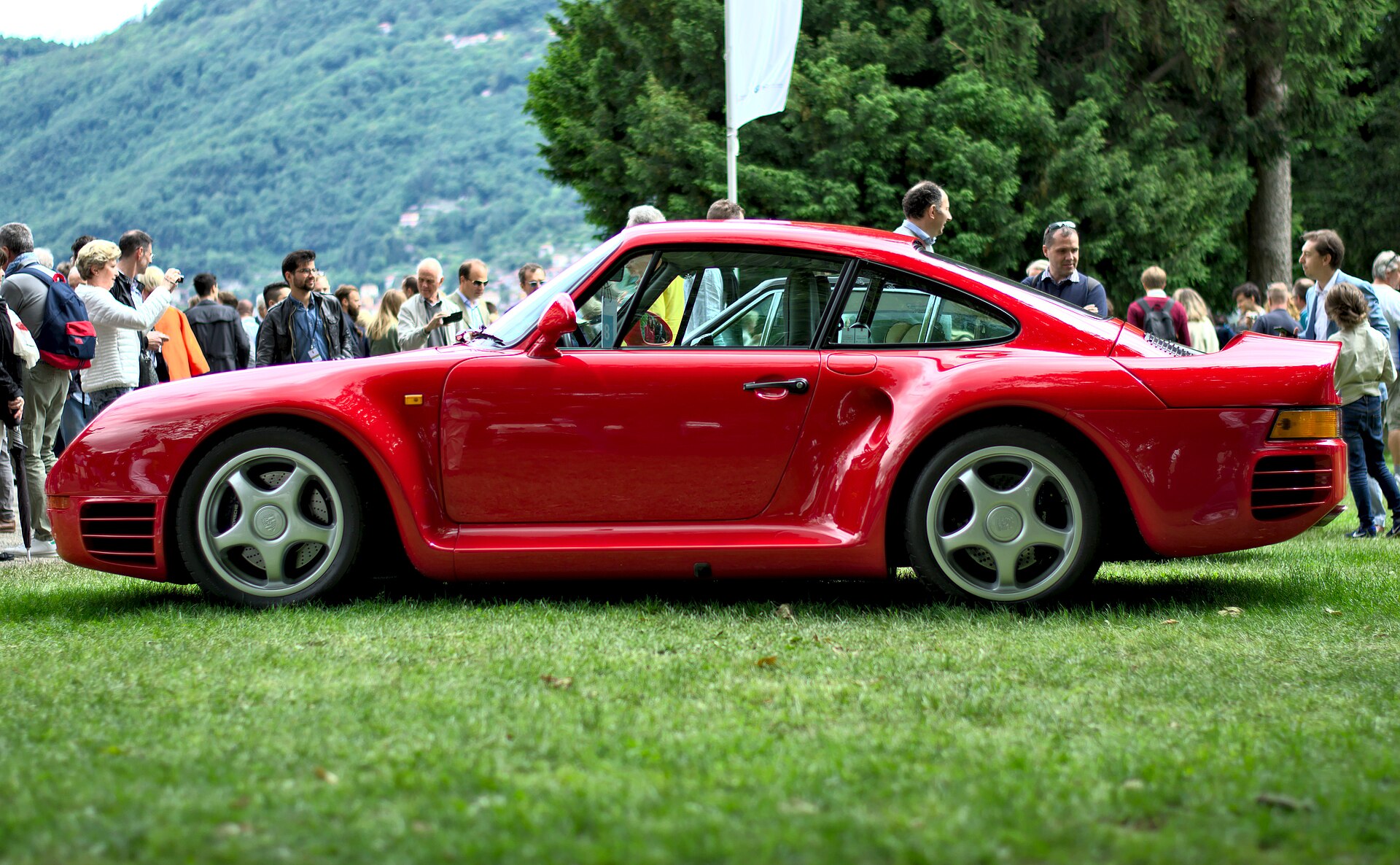
The Porsche 959 debuted as a 1986 model at the 1985 Frankfurt Motor Show, though first customer deliveries didn't begin until 1987. It was the world's fastest street-legal production car when it arrived, combined race-car performance with everyday drivability, and proved that all-wheel drive belonged on high-performance sports cars—a lesson that convinced Porsche to make it standard on turbocharged 911s for decades to come. Forty years later, it still matters.
What made the 959 revolutionary?
Three things separated the 959 from everything else on the road: a sequential twin-turbocharged flat-six engine, an all-wheel-drive system that could dynamically shift power between the rear and front wheels, and an aluminum and Kevlar composite body that kept weight down while maintaining rigidity.
Get it: Porsche 959 Die-Cast Model Car 1:18 on Amazon (Own a detailed replica of this engineering masterpiece for display; perfect for enthusiasts who appreciate the 959's des)
The engine was based on Porsche's 956 and 962 race cars. Sequential twin turbochargers—rather than identical turbos on each cylinder bank—delivered smooth power across the rpm range instead of the sudden kick-in that plagued other turbocharged Porsches of the era.
The all-wheel-drive system, called PSK (Porsche-Steuer Kupplung), was the real trick. It could send the majority of power to the rear wheels under hard acceleration, then shift torque to the front wheels for traction in slip conditions or on different road surfaces. The dashboard displayed real-time rear differential slip and front-axle power distribution—a feature that belonged in a race car, not a street car.
The body was built from aluminum and Kevlar composite instead of steel, with a Nomex floor. Aerodynamics were ruthless: a drag coefficient of 0.31 and zero aerodynamic lift. Porsche even developed automatic ride-height adjustment for the road version to maintain stability at speed.
How many were built and where?
Porsche manufactured 337 cars between 1986 and 1993, including prototypes and pre-production models from the initial run, with most completed during the main production period of 1986 to 1988. First customer deliveries began in 1987. In 1992 and 1993, eight additional cars were assembled from spare parts inventory. All eight of these late-production cars were Komfort versions in red or silver, and these are among the most sought-after 959s on the market today.
Most of the special-order interior leather work was also done by Baur's workers.
Komfort or Sport: which trim matters?
The 959 came in two trim levels. The Komfort version prioritized creature comforts and everyday usability. The Sport version was more track-focused. Both had the same engine and drivetrain; the difference was interior appointments and suspension tuning.
The eight late-production cars (1992–1993) are significantly rarer and more expensive than the regular production run.
What do you need to inspect before buying?
The 959 is a 40-year-old race car for the road. Inspection should focus on:
- Turbocharger condition: These are sequential turbos from a race-car lineage. Verify they have been serviced regularly and that boost pressure holds steady. Turbo failure is expensive.
- All-wheel-drive system: The PSK system is complex and requires specialist knowledge. Have a Porsche specialist inspect the differential, torque-distribution hardware, and any signs of fluid leaks.
- Fuel injection and engine management: The Bosch Motronic 2.1 fuel-injection system is old. Look for any hesitation, rough idle, or warning lights. Parts are available but not cheap.
- Composite body panels: Check for cracks in the aluminum and Kevlar bodywork. Damage to these panels is difficult and costly to repair correctly.
- Magnesium wheels: The 959's hollow magnesium alloy wheels have a built-in tire pressure monitoring system. Verify they are in good condition and that the tire pressure sensors work.
- Suspension and dampers: The automatic ride-height adjustment system is sophisticated. Have it checked by a specialist.
- Service history: A complete service record is essential. The 959 demands specialist maintenance and regular oil changes. Any gaps in history are a red flag.
What does ownership actually cost?
The 959 is not a car you buy to save money. Routine maintenance—oil changes, fluid flushes, brake service—requires a specialist Porsche shop familiar with this car's quirks. Parts are no longer in production; many are sourced from specialists or fabricated. Turbocharger service or replacement, all-wheel-drive system work, or suspension repairs will cost substantially more than comparable work on a modern 911.
Insurance and storage should be factored in. This is a collector car; most owners keep it garaged and drive it sparingly. Fuel consumption is heavy, especially with the turbos boosted.
To get a sense of current market value, check sold listings on Bring a Trailer, eBay Motors, and Hemmings. Hagerty's valuation tools also provide estimates based on comparable sales. Condition, mileage, service history, and whether it's one of the rare late-production cars will drive the price significantly.
Should you buy one today?
The 959 is a legitimate investment if you have the money, the space, and access to specialist service. It's a piece of automotive history—the car that proved all-wheel drive belonged on high-performance sports cars and that Porsche could build a supercar that was also livable. Collectors still hunt them because they represent a moment when engineering ambition and race-car technology translated directly into a street car.
But know what you're getting into. This is not a modern supercar. It requires patience, specialist knowledge, and deep pockets. If you're buying one, you're buying it because you understand what it is and why it matters—not because you need a fast car.
Quick answers
Was the 959 the fastest production car when it launched?
Yes. The 959 was the world's fastest street-legal production car when it arrived, with some variants capable of very high speeds in testing.
What made the all-wheel-drive system special?
The PSK system could dynamically shift torque between the rear and front wheels—sending the majority of power to the rear under hard acceleration and redistributing power based on grip and road conditions, making it adaptable to both racing and street driving.
Which 959s are the most valuable today?
The eight late-production cars built in 1992–1993 from spare parts inventory are among the most sought-after because they are significantly rarer than the regular production run.
How do I find the current market value of a 959?
Check sold listings on Bring a Trailer, eBay Motors, and Hemmings, or use Hagerty's valuation tools. Prices vary widely based on condition, mileage, service history, and whether it's one of the rare 1992–1993 late-production cars.
Was this worth your time?




Sound off
Disagree all you want, swear if you have to (we'll #@$%! it out). No harassment, slurs, threats, spam or links. Comments are screened before they appear, and you'll get a daily heads-up when the conversation picks up. Your email is never shown.