
Roswell 1947: what happened and why we still talk about it
A weather balloon sparked the UFO legend that still captivates us 75 years later.
This story has affiliate links. If you buy through them, Radazoid may earn a commission at no cost to you. How that works.
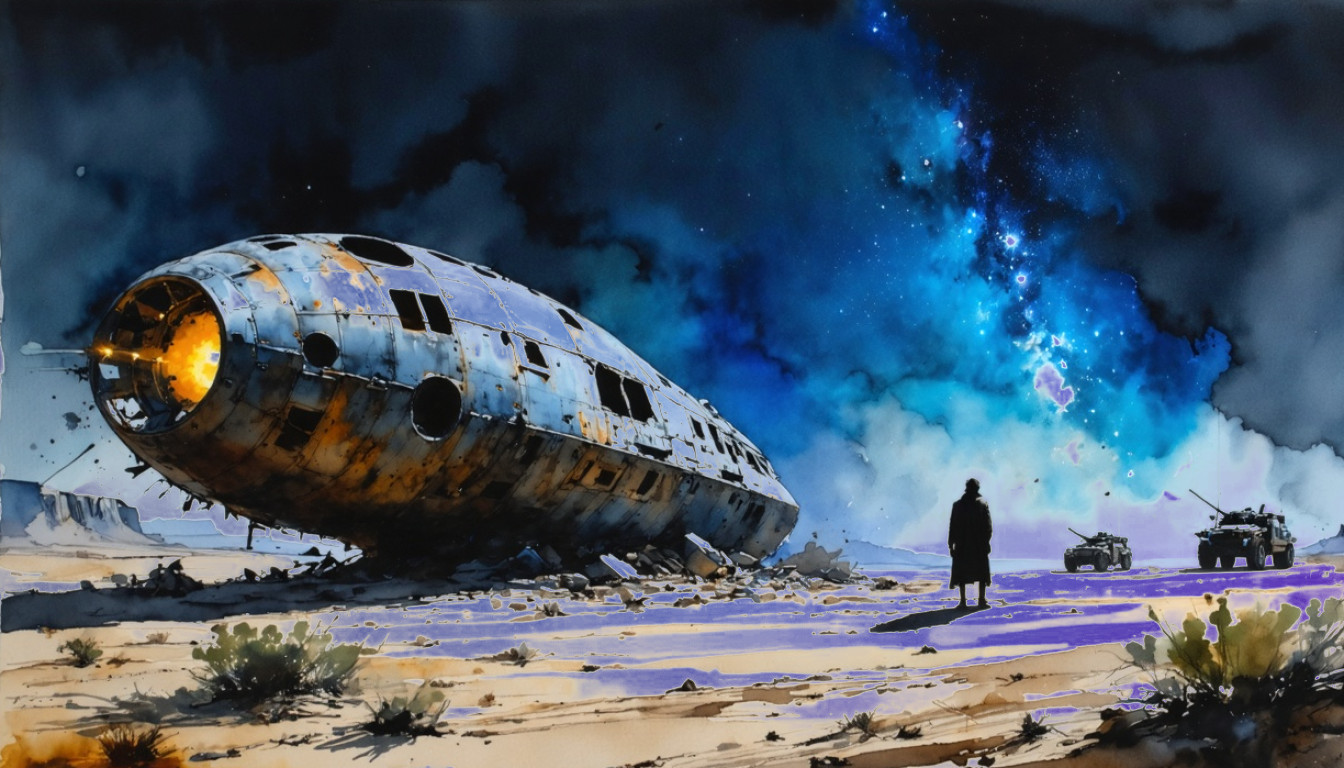
On July 8, 1947, Roswell Army Air Field announced it had recovered a "flying disc" near Roswell, New Mexico. Within hours, the story went global. By the next day, the Army retracted it: just a weather balloon, nothing to see here. What actually crashed was debris from Project Mogul, a top-secret military program that launched uncrewed balloon trains from nearby Alamogordo Air Field to listen for Soviet atomic tests. The balloons carried sensitive equipment and were classified so heavily that the Army couldn't tell the public the truth without exposing the program to the Soviets. So they lied—and created the greatest UFO legend in American history.
What the rancher actually found
On June 4, 1947, researchers at Alamogordo launched a long train of linked balloons carrying detection equipment. They lost radio contact within 17 miles of a ranch near Corona, New Mexico, managed by W. W. "Mac" Brazel. Later that month, Brazel discovered tinfoil, rubber, tape, and thin wooden beams scattered across several acres. He had no phone or radio, so he didn't know about the flying saucer craze sweeping the country that summer—the wave started after pilot Kenneth Arnold reported seeing mysterious objects performing impossible maneuvers. When Brazel heard about it from his uncle on July 5, he realized what he had might be worth money. Newspapers were offering about $3,000 for proof of a flying disc.
Get it: The Roswell Incident by Berlitz & Moore on Amazon (The 1980 book that launched the modern UFO conspiracy theory—essential reading for understanding how the legend was born)
Brazel drove to Roswell and told Sheriff George Wilcox, who called the base. Major Jesse Marcel and Captain Sheridan Cavitt went to the ranch, collected the debris, and brought it back to RAAF. The base commander, Colonel William Blanchard, notified his commanding officer, Brigadier General Roger M. Ramey, at Fort Worth Army Air Field in Texas. On July 8, RAAF public information officer Walter Haut issued a press release saying the military had recovered a "flying disc." The story hit the wire services and exploded worldwide. Robert Porter, an RAAF flight engineer, was part of the crew who loaded the material onto a plane to Fort Worth. He later said it was lightweight, not too large to fit in a car trunk, and wrapped in paper.
The retraction and the cover-up
By the next day, July 9, the Army changed the story. General Ramey held a press conference with the debris and told reporters it was just a weather balloon. Papers published photos of Ramey and Colonel Thomas J. DuBose posing with the wreckage—torn foil and sticks on packing paper. The flying saucer story died. For 30 years, nobody thought much about it.
What the Army didn't say: they were telling the truth about it being a balloon, but lying about why. Project Mogul was so secret that admitting the debris came from a classified military program would have revealed the program's existence and capabilities to the Soviets. A weather balloon cover story was the only way to kill the story without giving away national security secrets. It worked—until 1978.
How the conspiracy theory was born
In 1978, retired Air Force officer Jesse Marcel—the major who had recovered the debris 31 years earlier—went public. He claimed the Army's weather balloon explanation was a cover story, and he speculated that the debris was extraterrestrial. Marcel's account was popularized by the 1980 book The Roswell Incident, which turned the story into a conspiracy theory. Over the next decade, the narrative expanded wildly: not just one crashed UFO, but multiple spacecraft; not just debris, but recovered alien bodies; not just bodies, but autopsies and reverse-engineered alien technology. None of it had any factual basis, but it spread through UFO circles, books, and eventually TV shows like Unsolved Mysteries and In Search Of....
Project Mogul: the real answer
In the 1990s, the Air Force published reports that settled the question for anyone paying attention. The debris was from Project Mogul—a complex array of linked balloons and equipment designed to detect Soviet nuclear tests by listening for the sound waves they produced. The program was real, the balloons were real, and the crash was real. But the conspiracy theory had already taken on a life of its own. Many UFO believers rejected the Air Force explanation and accused the government of a cover-up, which is ironic: the government was covering something up, just not aliens.
The hoax that made it worse
In the 1990s, a documentary film circulated claiming to show footage of an alien autopsy from the Roswell crash. The film became famous in UFO circles and was broadcast on television. It was a hoax—a deliberate fabrication—but it cemented Roswell's place in pop culture as the ultimate government conspiracy. The autopsy footage was fake, but by then the legend was too big to kill.
Roswell today: tourism and pop culture
The town of Roswell, New Mexico, embraced the legend and built a tourism industry around it. The Roswell UFO Museum draws thousands of visitors every year who want to see the debris, read the witness accounts, and decide for themselves what really happened. The town hosts a UFO Festival that celebrates the incident and the conspiracy theories surrounding it. Roswell has become shorthand for government secrecy, extraterrestrial contact, and the power of a good story to outlast the facts.
The Roswell incident also became a fixture in science fiction: TV shows, movies, and books use it as a template for government cover-ups and alien encounters. It's the most famous UFO sighting in history, and it started because a classified military program crashed in the desert and the Army couldn't tell the truth without blowing a national security secret. Thirty years later, a retired officer speculated about aliens, a book turned it into a conspiracy theory, a fake autopsy film made it seem real, and a town turned it into a business. The actual story—a secret balloon program listening for Soviet nukes—is real and interesting. The conspiracy theory is more fun.
Quick answers
Did the military really recover a UFO?
No. The debris was from Project Mogul, a classified military balloon program designed to detect Soviet atomic tests. The Army couldn't say so in 1947 because it would have revealed the program to the Soviets, so they claimed it was a weather balloon.
Were there alien bodies?
No credible evidence supports this. The 1990s "alien autopsy" film that circulated was a hoax. The conspiracy theory expanded over decades to include alien corpses, autopsies, and reverse-engineered technology, but none of it has any factual basis.
Why do people still believe it was aliens?
The conspiracy theory is more exciting than the truth, and once it took hold in the 1970s and 1980s, it became part of UFO culture and pop culture. The town of Roswell also built a tourism industry around it, keeping the legend alive.
Can I visit Roswell and see the debris?
Yes. The Roswell UFO Museum displays exhibits about the incident, witness accounts, and the competing theories. The town also hosts a UFO Festival. You can see photos and artifacts related to the crash and decide for yourself what you believe.
🛒 Born in 1947? Get the “Back in 1947” birthday poster → Radazoid Shop
🖨️ Printable party games & trivia at Printable Barn →
Was this worth your time?



Sound off
Disagree all you want, swear if you have to (we'll #@$%! it out). No harassment, slurs, threats, spam or links. Comments are screened before they appear, and you'll get a daily heads-up when the conversation picks up. Your email is never shown.