
Ayrton Senna's death at Imola 1994: F1's darkest weekend and the safety reckoning that followed
How two deaths in one weekend forced F1 to finally confront its deadly safety crisis.
This story has affiliate links. If you buy through them, Radazoid may earn a commission at no cost to you. How that works.
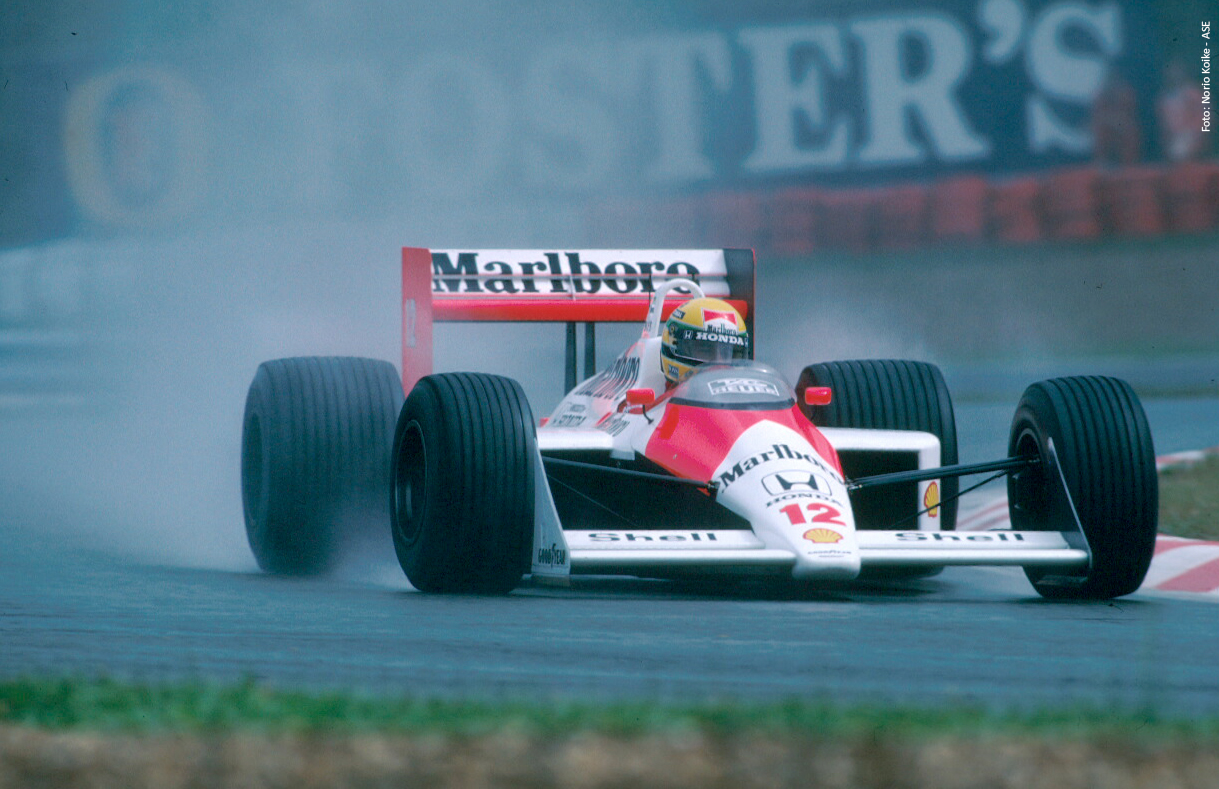
On 1 May 1994, Ayrton Senna, a three-time world champion and the most dominant driver in Formula One, died in a crash during the San Marino Grand Prix at Imola. He was 34. It was the darkest day in modern motorsport—and it changed everything.
What happened that day
The weekend at Imola was already a disaster. On Friday practice, Jordan driver Rubens Barrichello hit a kerb, launched into the air, and crashed hard enough to knock him unconscious. FIA doctor Sid Watkins saved his life when Barrichello's tongue blocked his airway. Barrichello survived with a broken nose and sprained wrist. Senna, who was leading the championship in his new Williams, stopped to check on him at the medical centre.
Get it: Ayrton Senna: The Official Biography on Amazon (Comprehensive account of Senna's life, career, and legacy by those who knew him best)
On 30 April, during Saturday qualifying, Austrian rookie Roland Ratzenberger's front wing failed at the Villeneuve corner. His Simtek hit the bare concrete wall. Ratzenberger died from injuries sustained in the crash. He was the first driver fatality in Formula One since the 1982 Canadian Grand Prix.
The session restarted. Senna took pole position. On race day, he led from the start. On lap 6, his Williams went into the Tamburello corner and hit the wall. The crash killed him instantly. Two drivers dead in one weekend. The sport had no excuse left.
Why Imola broke F1's denial
Formula One had been living on borrowed time. The cars were faster every year, the circuits hadn't kept up, and the sport's attitude toward risk was reckless. Drivers knew it. The sport had convinced itself it was safe. It wasn't.
Senna's state funeral in São Paulo drew enormous crowds. A three-time world champion, a national hero, a man at the peak of his powers, was gone. The grief was global and immediate. Formula One couldn't hide behind statistics anymore.
The safety reforms that followed
The Grand Prix Drivers' Association reformed after a long absence. Track layouts changed. Run-off areas replaced concrete walls. Cars were redesigned to slow down. Regulations tightened. Every circuit that hosted F1 had to upgrade or lose its race. The sport finally invested in what should have been obvious: keeping drivers alive.
The result: safety standards improved dramatically. Subsequent regulations introduced larger run-off zones, better barriers, and stricter car design rules. The sport stopped gambling and started engineering for survival.
The legal aftermath
Italian prosecutors charged six people with manslaughter: Frank Williams, Adrian Newey, Patrick Head, Federico Bendinelli, Giorgio Poggi, and Roland Bruynseraede. All were acquitted. The case took years to conclude due to an appeal and retrial. No one went to prison. The focus shifted from blame to prevention.
Senna's legacy
Senna won multiple Grands Prix, took pole positions at a record rate at the time of his death, and claimed three world championships with McLaren in 1988, 1990, and 1991. He was famous for his raw speed, his uncompromising style, and his wet-weather brilliance. He was also a philanthropist who cared about Brazil's poor. When he died, he was driving for Williams, chasing a fourth title.
His death ended an era of F1 where risk was part of the deal. After Imola, the sport treated safety as non-negotiable. Every circuit upgrade, every regulation change, every run-off area exists because of what happened that day. Senna is remembered as a legend and a national hero of Brazil—and as the driver whose death finally forced Formula One to grow up.
Quick answers
Was Senna's crash his own mistake or a car failure?
The exact cause remains debated. Senna was leading and pushing hard; the Williams had setup issues that weekend. Italian prosecutors investigated and found no criminal negligence.
How did F1 change after Imola?
Track layouts were redesigned with larger run-off areas, concrete walls were replaced with safer barriers, car designs were altered to reduce speed, and circuits had to upgrade or lose their races.
Who won the 1994 San Marino Grand Prix?
Michael Schumacher, driving for Benetton, won the race. Nicola Larini finished second in a Ferrari, and Mika Häkkinen was third in a McLaren.
What was Senna's record in Formula One?
Senna won multiple Grands Prix, took pole positions at record rates, earned multiple fastest laps, and finished on the podium many times across 11 seasons. He won three world championships: 1988, 1990, and 1991.
Was this worth your time?



Sound off
Disagree all you want, swear if you have to (we'll #@$%! it out). No harassment, slurs, threats, spam or links. Comments are screened before they appear, and you'll get a daily heads-up when the conversation picks up. Your email is never shown.