
The wildest concept cars of the 70s, 80s and 90s, and what became of them
From wedge-shaped dreams to turbine fantasies, here's what happened to the wildest show cars ever built.
This story has affiliate links. If you buy through them, Radazoid may earn a commission at no cost to you. How that works.
Concept cars are the automotive equivalent of a designer's fever dream: radical, impractical, and often beautiful in ways production cars never will be. They exist to make people say "what if?" and to test whether the public will buy into crazy ideas before the bean counters kill them. From the 1970s through the 1990s, designers threw everything at the wall—gullwing doors, turbines, experimental engines, even nuclear power—to see what might stick. Some ideas became classics. Most became cautionary tales.
The 1970s: When Aerodynamics Got Weird
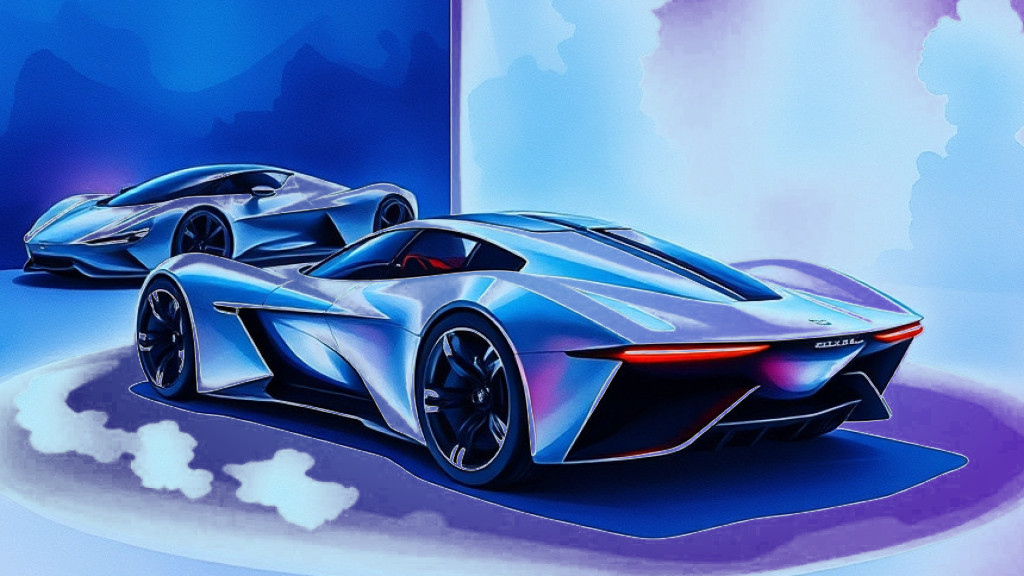
The 1970s were all about pushing the envelope on speed and efficiency. The Ferrari Modulo, designed by Paolo Martin at Pininfarina and unveiled at the 1970 Geneva Motor Show, looked like a wedge that had decided to become a car. It was low, flat, and so futuristic that it still turns heads in photos. The Modulo never made production, but its influence on wedge-shaped sports cars lasted decades.
Get it: Concept Cars: Masterpieces of Design Book on Amazon (Deep dive into the design philosophy and stories behind legendary concept cars from the 70s-90s era discussed in this ar)
The Lancia Stratos Zero, another Marcello Gandini masterpiece shown at the 1970 Turin Motor Show, took the wedge concept even further. It was so extreme—so impossibly low and angular—that it seemed to exist in a different dimension from normal cars. Like the Modulo, it stayed a one-off dream.
The 1980s: Turbines and the Future
The 1980s loved the idea of gas turbines. General Motors built a series of turbine-powered concept vehicles that captured that decade's optimism that jet engines belonged in cars. The reality was messier: what works on the show stand rarely works on the street, and turbines never became the automotive future everyone expected.
The 1990s: When Concepts Got Serious
By the 1990s, concept cars were getting smarter about what might actually sell. The Jaguar XJ220 generated such overwhelming public response at its debut that Jaguar actually built a limited production run. It wasn't exactly what the concept promised—the final car differed from the original vision—but it proved that a concept could cross over into reality if the demand was there.
The Opel GT started as a styling exercise shown at motor shows in 1965, then was developed into a production model that debuted in 1968—one of the few European show cars to jump into series production.
What Actually Made It
The success rate for concept-to-production is brutal. Most concepts are one-offs that exist only in photos and museum archives. But a few ideas proved durable enough to survive the journey from show stand to dealer lot:
- Jaguar XJ220 became a limited-production supercar after overwhelming public demand.
- Opel GT evolved from a 1965 styling exercise into a production model, one of the few European show cars to reach series production.
Why Concepts Matter
Concept cars are a manufacturer's permission slip to dream out loud. They test ideas that might be too risky, too expensive, or too weird for a production car. Most fail. But every radical shape, every experimental engine, every "what if?" pushes the whole industry forward, even if the concept itself never sees a showroom floor. The 70s, 80s and 90s gave us some of the wildest automotive fever dreams ever committed to metal and fiberglass—and even the ones that never made it to production changed how we think about what a car could be.
Quick answers
Did any 70s concept cars actually become production models?
Very few. Most 1970s concepts like the Ferrari Modulo and Lancia Stratos Zero stayed as one-off show cars. The 1970s were more about pushing design extremes than building cars people could actually buy.
Which concept from these three decades actually made it to production?
The Jaguar XJ220 is the most famous success story: it started as a concept that was so popular Jaguar built a limited production run. The Opel GT show car was developed into a production model. Most others stayed dreams.
Why don't more concepts become production cars?
Concepts are built to impress at shows, not to meet safety regulations, cost targets, or real-world practicality. A production car needs crash protection, emissions compliance, affordable manufacturing, and dealer support. Most concept ideas are too radical, too expensive, or too impractical to survive that journey.
What made the wedge-shaped cars of the 70s so influential?
The Ferrari Modulo and Lancia Stratos Zero proved that extreme angles and low profiles weren't just for racing—they could define a design philosophy. That wedge aesthetic influenced sports car design for decades.
Was this worth your time?




Sound off
Disagree all you want, swear if you have to (we'll #@$%! it out). No harassment, slurs, threats, spam or links. Comments are screened before they appear, and you'll get a daily heads-up when the conversation picks up. Your email is never shown.